Android vs iPhone Pros and Cons A Practical Guide
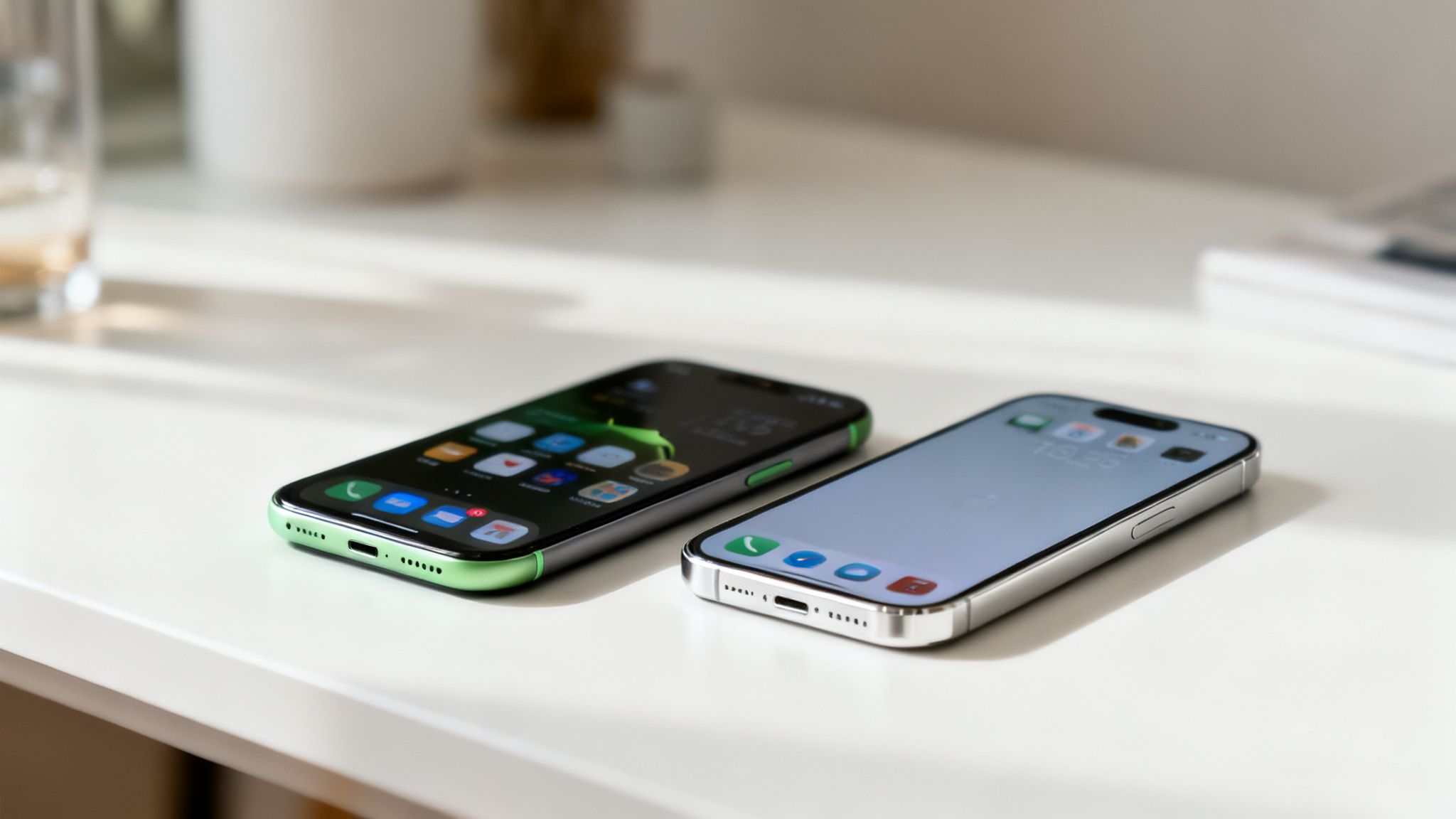
The choice between an iPhone and an Android phone boils down to a single, fundamental question: Do you value seamless simplicity or ultimate flexibility? iPhone's a premium, all-in-one experience, while Android offers a world of choice at every price point. The pros and cons of Android vs iPhone really come down to what you want your phone to be for you.
Choosing Your Digital Companion
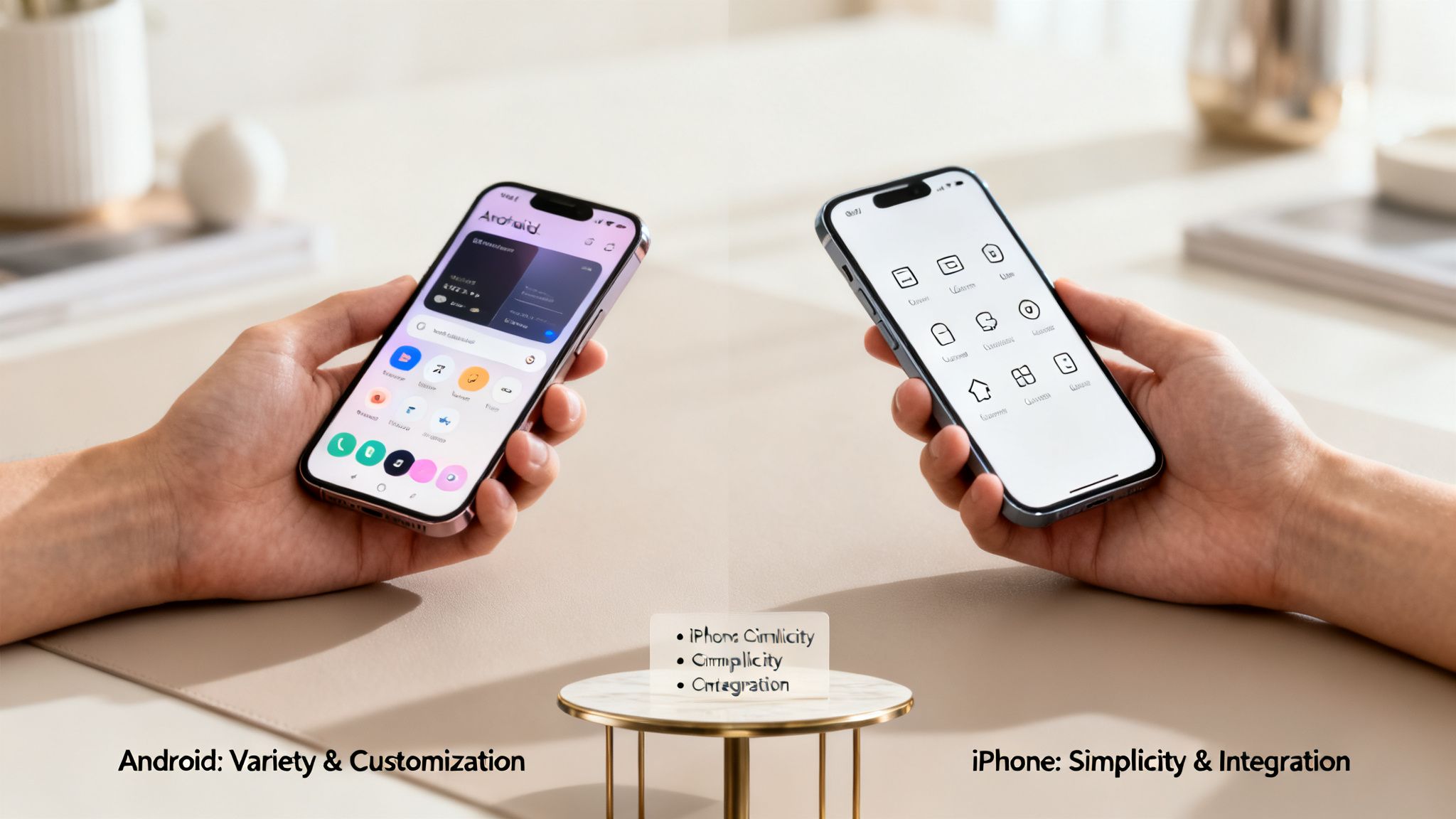
The Android vs. iPhone debate is one of the oldest and most passionate conversations in tech. For most of us, it’s not just about picking a device—it’s about choosing the ecosystem that will manage our digital lives for years to come. This guide isn't about naming a "winner," but about helping you figure out which platform is the right fit for you.
We'll look past the marketing buzz and dive into what it’s actually like to use these phones day-to-day. Whether you want the creative control of Android or the polished, "it just works" nature of the iPhone, my goal is to help you make an informed and confident choice.
Key Philosophical Differences
At their heart, these two platforms represent completely different philosophies. Apple's iOS is a "walled garden," a closed system where the company designs both the hardware and the software. This tight integration results in a predictable, secure, and incredibly user-friendly experience where everything is built to work together flawlessly.
Think of the iPhone as a luxury sedan. The controls are exactly where you expect them, the ride is smooth, and every detail is meticulously engineered for a premium feel. You can't really modify the engine, but you probably don't need to.
Android, by contrast, is open-source. This means any manufacturer—from Samsung and Google to OnePlus and Motorola—can take the base software and build a phone around it. The result? An incredible variety of devices at every conceivable price. This approach puts personalization and control directly in your hands. As you compare, it’s also useful to understand how newer network standards can affect your experience—learning what 5G technology is is a great place to start.
To kick things off, this table gives a quick snapshot of the core differences that define each platform.
Android vs iPhone Key Differentiators
| Attribute | Android | iPhone (iOS) |
|---|---|---|
| Hardware Choice | Extremely wide variety from many manufacturers | Limited, premium models made only by Apple |
| Customization | Highly customizable (launchers, widgets, icons) | Limited to widgets, wallpaper, and app layout |
| App Store | Google Play Store (more flexible app policies) | Apple App Store (strict curation, high quality) |
| Ease of Use | Varies by manufacturer, generally flexible | Highly intuitive and consistent across all devices |
This table lays the groundwork for our deeper comparison. As we go through each category, think about which of these columns better aligns with your personal style and technical comfort level.
Hardware Variety and Price Points
When you start weighing Android vs. iPhone, the first thing you'll notice is the massive difference in the phones themselves. The Android world is like a sprawling open-air market with a vendor for every taste and budget, while Apple runs a tightly controlled, high-end boutique. This is more than just a minor difference—it shapes everything from how much you'll spend to the features you can get before you even power the device on.
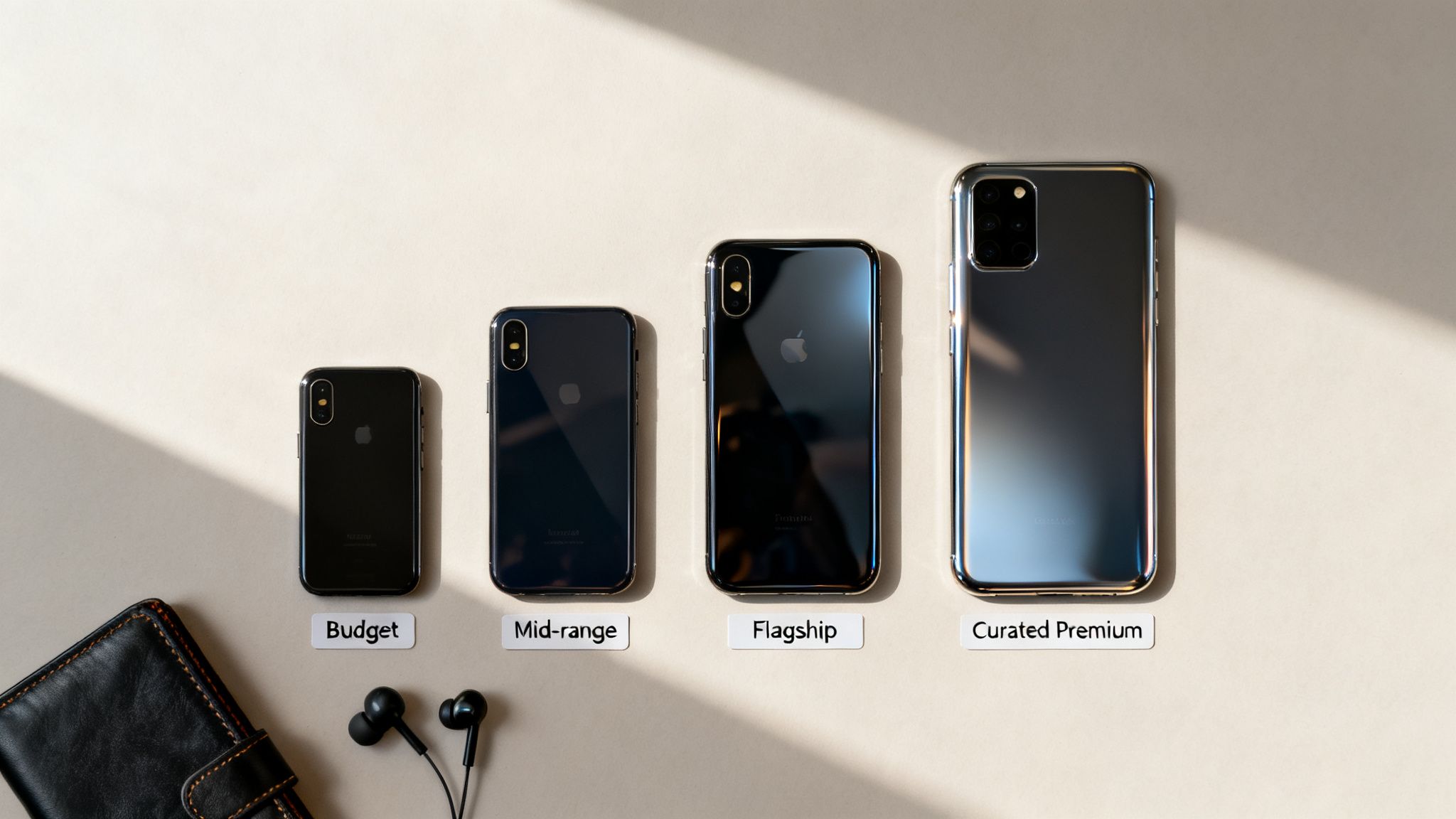
This philosophical split in hardware is often the biggest deciding factor for people. Your choice here really comes down to a simple question: do you want endless options, or do you prefer polished simplicity?
The Android World of Endless Options
The defining feature of the Android platform is choice. You have dozens of manufacturers—from household names like Samsung and Google to enthusiast brands like OnePlus—all building hundreds of different phones every year. All this competition means there’s a device built for pretty much any niche you can imagine.
This is why Android dominates the global market, holding a staggering 72.77% market share as of November 2025, compared to the iPhone’s 26.82%. That translates to over 3.9 billion active Android devices worldwide. These numbers, detailed in reports on Backlinko.com, show how Android powers everything from ultra-affordable phones to premium flagships like those from Samsung, which shipped 58 million units in Q2 2025 alone.
This sheer variety means you can find a phone that’s just right for you:
- For the student on a budget: A sub-$300 Motorola phone gets the job done, handling all the essential apps without costing a fortune.
- For the tech enthusiast: A specialized gaming phone might offer a high-refresh-rate screen and a beefy cooling system for peak performance.
- For the professional on the go: A device like the Samsung Galaxy S Ultra with its built-in stylus is perfect for productivity and multitasking.
With Android, you can hunt down the exact features you care about, whether that's a headphone jack, expandable storage with a microSD card, or a wild foldable screen.
The iPhone's Curated and Premium Approach
Apple plays a completely different game. By designing both the hardware and the software in-house, it offers a small, highly focused lineup of premium iPhones each year. This "walled garden" approach gives Apple total control over quality, ensuring every device feels consistent and predictable.
Sure, you have fewer models to pick from, but each one is crafted from premium materials and built to work perfectly with iOS. The advantages of this method are immediately obvious:
- Consistent Quality: Whether you buy the standard model or the top-tier Pro Max, you know you're getting a high-end feel and polished performance.
- Simplified Choice: Instead of getting lost in spec sheets, you just pick the size and features you need from a handful of excellent options.
- Optimized Performance: Because Apple makes the chips and the software, it can fine-tune iOS to run flawlessly on its hardware.
The core trade-off is straightforward: Android offers a phone for every possible niche and budget, while Apple offers a few highly polished phones that aim to be the best single option for most people. Your decision here sets the stage for every other aspect of your smartphone experience.
This curated approach generally comes with a higher price tag, but it also helps iPhones hold their value remarkably well and receive software updates for years—a key factor in the total cost of ownership.
Operating System and Customization
If the hardware is the body, the operating system (OS) is the soul of your phone. It dictates every single tap, swipe, and interaction, and this is where the fundamental philosophies of Google and Apple really clash. Think of it this way: do you want a digital canvas you can paint yourself, or a perfectly curated gallery that’s intuitive the moment you walk in?
The age-old debate between Android and iOS really comes down to freedom versus simplicity. Android is all about an open, endlessly flexible environment. iOS, on the other hand, delivers a polished, user-friendly experience that requires virtually no setup. Your choice here is less about specs and more about personality.
Android: The Power of Personalization
Android is built on an open-source foundation, and that one detail changes everything. It’s an OS designed to be tinkered with. If you love rearranging your furniture, customizing your desktop, or tweaking settings until they're just right, Android will feel like a creative playground. Its greatest strength is putting you in complete control.
This control isn't just superficial. You can completely transform the user interface with third-party launchers like Nova or Action Launcher, which let you change everything from app icon styles to your home screen layout. Widgets are another game-changer, placing live, interactive information—your calendar, weather, or to-do list—right where you need it for a quick glance.
Android's flexibility also means you can:
- Swap Default Apps: Don’t like the pre-installed browser or messaging app? Just download a new one from the Google Play Store and make it the default.
- Sideload Applications: Android lets you install apps from outside its official Play Store, opening up a much wider world of software.
- Get Deep System Access: For the truly adventurous, it’s possible to unlock the bootloader and install a completely different version of Android, known as a custom ROM.
The core promise of Android is control. It hands you the keys to the entire system and trusts you to build the experience you want. For anyone who values that freedom, there’s simply no substitute.
iOS: Effortless and Intuitive Simplicity
Apple’s approach with iOS is entirely different. It’s built on the idea that powerful technology should be simple to use. The interface is clean, uniform, and incredibly intuitive. From the moment you power on a new iPhone, the navigation just makes sense. This "it just works" philosophy is a huge win for anyone wanting a reliable, stress-free experience without a steep learning curve.
Apple maintains an iron grip on both its hardware and software, ensuring every part of the OS is perfectly optimized for the device it's on. This creates a remarkably smooth, responsive feel that stays consistent across every app and menu. While it doesn't offer Android's radical customization, iOS has adopted features like home screen widgets and the App Library in recent years. Still, its customization is more about rearranging the furniture than remodeling the house. If you're looking to make some minor cosmetic tweaks, you can learn how to change icons on your phone on either platform.
The biggest wins for the iOS approach are:
- Consistency: The experience is nearly identical on every iPhone, which makes it easy to help a friend or family member with their device.
- Ease of Use: There are no complex settings to dig through or hidden menus to find; the core functions are always front and center.
- A Polished Feel: Because Apple controls the entire ecosystem, apps tend to share a consistent design language and integrate seamlessly with the OS.
Ultimately, the software choice boils down to a simple question: Do you see your phone as a tool that should adapt to you (Android), or as one that should be perfectly functional right out of the box (iPhone)?
App Ecosystems and Daily Integration
Your phone isn't just about the hardware or the operating system; it's about the apps and services you live with every day. This is where the whole "ecosystem" conversation comes in, and it’s a big one. Apple and Google have built powerful networks of apps and services, but their core philosophies couldn't be more different, directly shaping how you interact with your digital world.
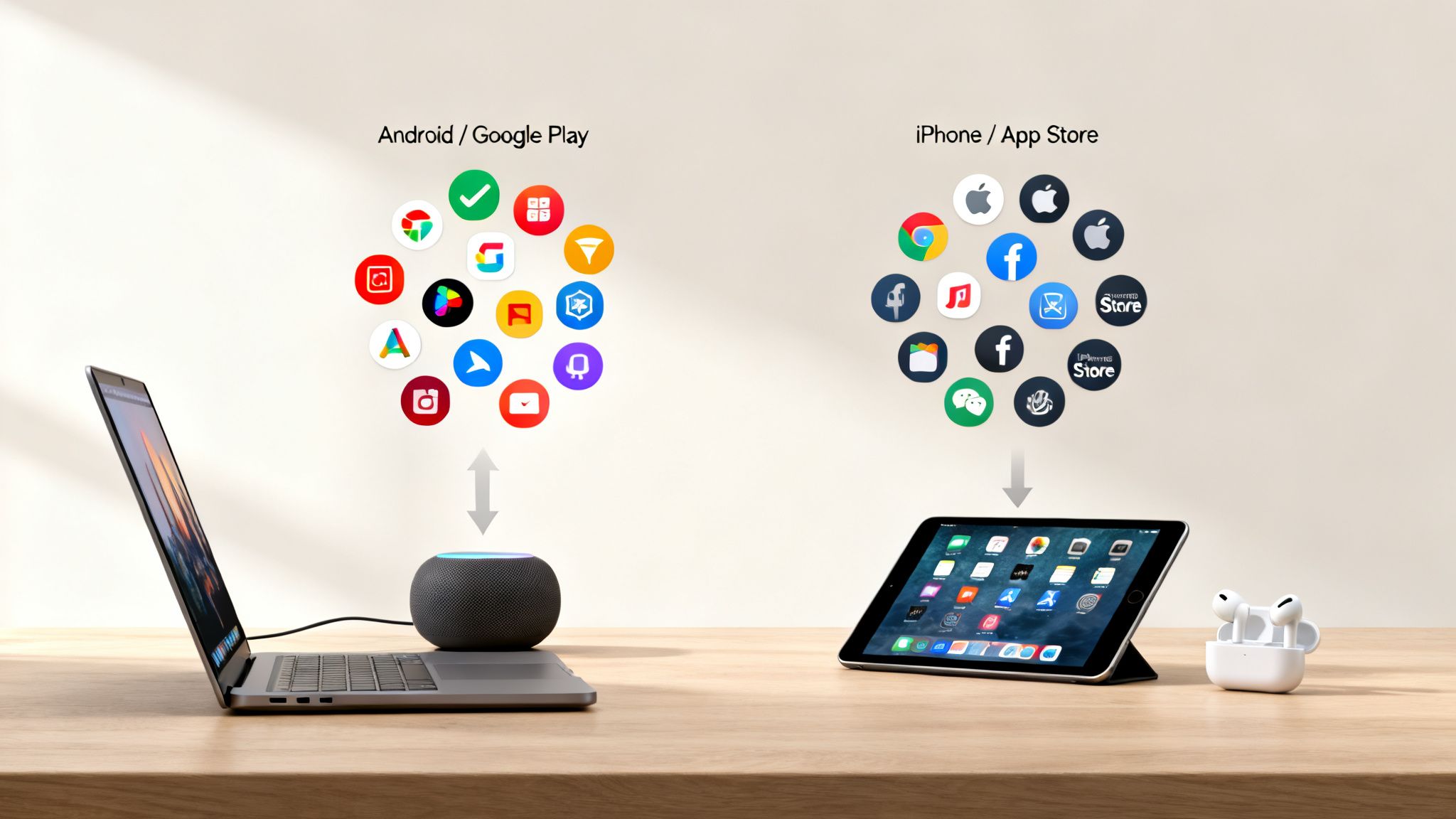
The choice boils down to this: do you want an exclusive, tightly integrated club, or a flexible, open network that plays well with others? This decision impacts everything from the quality of your apps to how easily your phone talks to your laptop.
App Stores: The Gatekeepers of Quality and Variety
The Google Play Store and Apple's App Store are your front doors to millions of apps, but they have very different bouncers. Apple’s App Store is famously a “walled garden.” Every app undergoes a meticulous review, which generally results in a higher standard of quality, security, and consistent design. This is why you’ll often see the hottest new apps or social media features launch on iOS first.
The Google Play Store, on the other hand, is a far more open environment. This fosters a massive variety of applications and gives developers more freedom. It’s a huge win if you're hunting for niche tools, deep customization apps, or utilities that Apple simply wouldn't approve. For instance, the options for boosting your efficiency are nearly endless—check out our guide on the best Android apps for productivity to see what I mean. The trade-off? You might stumble across a few less-polished or lower-quality apps along the way.
Ecosystem Lock-In: The Power of Integration
This is where the real battle lines are drawn. Apple has absolutely mastered the art of "ecosystem lock-in," creating a suite of services that work together flawlessly—but only on Apple devices.
- iMessage: The "blue bubble" effect is real. This messaging service is a powerful social anchor, offering a seamless experience with high-quality media sharing and read receipts that are exclusive to iPhone-to-iPhone conversations.
- FaceTime: Baked right into the OS, Apple’s video and audio calling app is incredibly simple and reliable for connecting with other Apple users. It just works.
- AirDrop: Need to send a photo from your iPhone to your Mac? AirDrop does it instantly and wirelessly. It’s a convenience that’s tough to replicate on other platforms.
The power of Apple's ecosystem is its frictionless integration. If you already live on a MacBook, iPad, and Apple Watch, an iPhone doesn't just feel like the best choice—it often feels like the only one that makes sense.
This tight integration is a massive advantage in certain markets. In the US, for instance, iPhones command a dominant 58.13% market share as of 2025, well ahead of Android's 41.61%. This popularity, fueled by iMessage and a premium brand image, is especially strong among younger demographics. This strength also has a huge financial impact globally, as iOS captures a staggering 68% of global app revenue despite having fewer users. Why? Because its audience in high-income regions tends to spend more on apps and in-app purchases.
Google’s approach is the complete opposite. It’s more platform-agnostic, designing its core services to work well everywhere, not just on Android phones. This is a massive plus for anyone who mixes and matches their tech. Your Gmail, Google Drive, Google Photos, and Google Maps accounts work just as well on an iPhone as they do on a Windows PC or a Samsung tablet. This flexibility frees you from being locked into a single brand, making it much easier to switch devices in the future without upending your digital life.
Security, Privacy, and Software Updates
When you get down to it, how a company handles security and software updates reveals its entire philosophy. This is a huge part of the Android vs. iPhone debate. One platform is a fortress with a single gatekeeper, while the other is an open city with a highly advanced security force.
This isn't just tech jargon; it's about how long your phone will last, how safe you are from threats, and who controls your personal data. You're choosing between Apple’s top-down, locked-in security and Google’s more flexible, layered defense.
Apple’s Walled Garden
Apple has staked its entire reputation on a "walled garden." They control everything: the silicon inside, the operating system, and every single app that makes it onto the App Store. For security and privacy, this tight grip is a massive advantage.
Every app goes through a strict human review process, which drastically cuts down the risk of accidentally downloading something nasty. Apple also gives users direct control over their information. Features like App Tracking Transparency (ATT), which forces apps to ask for permission before tracking you across the web, have fundamentally changed the game for user privacy.
On top of that, Apple's commitment to software updates is second to none. It’s not unusual for an iPhone to get major iOS updates for five to seven years. This keeps your phone secure long after you’ve bought it and helps it hold its value. For more on keeping your data safe, our guide on how to protect your privacy online has some great tips.
Android's Layered Defense in an Open Field
Android is open-source, so its security model has to be different by design. While that openness can sound risky, Google has poured immense resources into a multi-layered security system to protect its sprawling ecosystem.
The most obvious tool is Google Play Protect, which is constantly scanning billions of apps for malware, both on your phone and in the Play Store. Think of it as a silent, 24/7 security guard. Android has also beefed up its defenses with granular permissions and scoped storage, letting you decide exactly what data an app can and can't touch.
The core trade-off is clear: Apple’s iOS offers proactive security through strict control and curation, making it inherently difficult for threats to get in. Android provides reactive, intelligent security that constantly monitors an open environment for threats, offering more user freedom.
The elephant in the room for Android has always been fragmentation. With so many different manufacturers, getting updates out to everyone is a huge logistical challenge. If you own a Google Pixel, you get updates instantly. If you have a phone from another brand, you might have to wait for them to test and release it.
Google has been working hard to fix this. They now push out monthly security patches and use a system called Project Mainline to update core OS components directly through the Play Store, bypassing the manufacturer entirely. So even if you aren't on the latest version of Android, you’re still getting the most critical security fixes.
Making the Right Choice for Your Lifestyle
After digging into the hardware, software, app stores, and security, the whole Android vs. iPhone debate really comes down to a personal call, not a technical knockout. There's no single "best" phone out there—just the best phone for you, your budget, and how you actually live your life. The final decision is all about which platform's philosophy feels right.
This choice often boils down to what you value more: tight control for a secure and predictable experience, or open flexibility for total customization. This decision tree can help you figure out which approach fits you best.
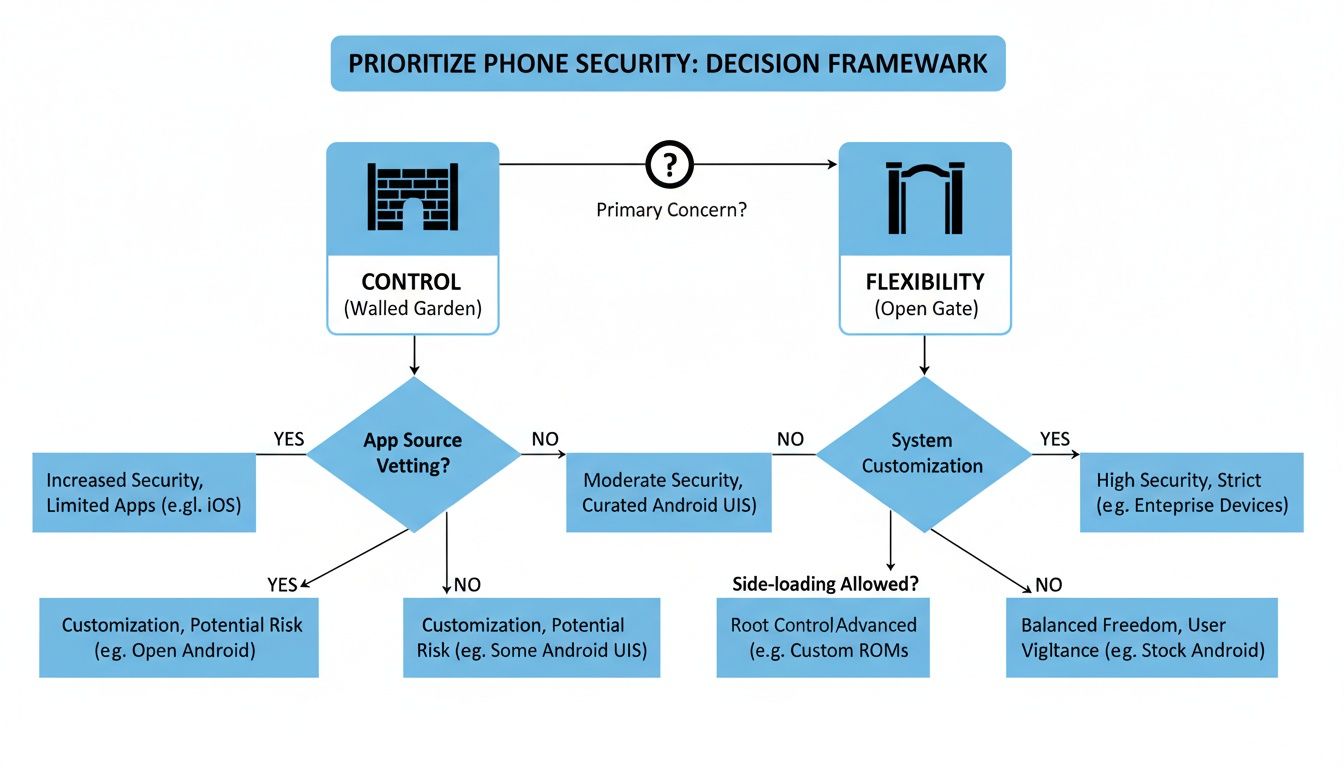
As you can see, there’s a fundamental trade-off. iOS is a "walled garden," perfect for those who want curated security. Android, on the other hand, offers an "open gate" for anyone who prefers more freedom and direct control.
When to Choose an iPhone
You should probably lean toward an iPhone if your top priorities are simplicity, long-term value, and a device that works seamlessly with other Apple products. It's the go-to choice if you just want your tech to work perfectly right out of the box, no tinkering required.
Consider an iPhone if you:
- Are already bought into the Apple ecosystem (think Mac, iPad, or Apple Watch).
- Appreciate a straightforward, intuitive experience that feels the same across all your apps.
- Want guaranteed software and security updates for years, which keeps the phone's resale value high.
- Live on iMessage and FaceTime to stay in touch with friends and family.
The iPhone really shines for people who see their phone as a reliable, elegant tool. It’s built to just work, delivering a polished, high-quality experience with minimal fuss.
When to Choose an Android Phone
An Android phone is almost certainly a better fit if your decision is driven by a specific budget, a love for personalization, or the need for hardware features Apple just doesn't offer. This is the platform for people who enjoy tinkering and making their device truly their own.
Go with Android if you:
- Want a massive selection of phones at every price point, from budget-friendly models to bleeding-edge flagships.
- Love to customize everything, from arranging widgets on your home screen to picking your own default apps for everything.
- Need specific hardware like a built-in stylus, a headphone jack, or expandable storage via a microSD card.
- Juggle a mix of devices (like a Windows PC and an Android tablet) and rely on services that work everywhere.
At the end of the day, both platforms are incredibly capable. Your job is to weigh what really matters in your daily use. If you do decide to jump from one to the other, getting your data moved over is the first big step. Check out our guide on how to transfer data to a new phone for some practical advice to make the switch as painless as possible. The best advice? Pick the device that complements your life, not complicates it.
Frequently Asked Questions
Even after going through all the details, you might still have a few nagging questions. It’s totally normal. Let's tackle some of the most common ones that come up when people are on the fence between Android and iPhone.
How Big of a Headache Is Switching Platforms?
Moving from Android to iPhone (or vice versa) is much less painful than it used to be, but it’s still not a one-click affair. Both Apple and Google have built tools to get you started. If you're going to an iPhone, Apple's "Move to iOS" app on the Google Play Store will handle the basics—your contacts, message history, photos, and calendars.
The key is to manage your expectations. Your core information will probably move over just fine, but your apps are a different story. You'll need to redownload every single one from the new app store, and yes, that means repurchasing any paid apps. In-app data, like your progress in a game, is often lost unless it’s tied to a cloud account (like Facebook or a Google account).
Going from iPhone to Android is a similar deal, usually done with a cable when you first set up your new phone. Your contacts, photos (via Google Photos), and calendar events will come along for the ride. But your iMessage history? That's staying behind in Apple’s world. The switch is doable, just be ready to do a little manual work to get things just right.
Which Phone Actually Has a Better Camera?
Honestly, trying to crown one platform as the undisputed camera king is a fool's errand. The top-tier phones from both camps—think the latest iPhone Pro versus a Google Pixel or Samsung Galaxy S—are all capable of taking breathtaking photos and videos. The real difference isn't about which is "better," but how they see the world.
The decision really boils down to your personal taste in photo style. Samsung phones are famous for their vibrant, punchy, and saturated images that look amazing on social media. iPhones, on the other hand, tend to capture more natural, true-to-life colors. Neither approach is wrong; they're just different.
Beyond the color, certain features might be the tie-breaker for you.
- For the Videographer: iPhones are widely seen as the gold standard for video. The footage is consistently smooth, and features like Cinematic mode give your videos a professional feel.
- For the Zoom Fanatic: This is where high-end Android phones, especially from Samsung, often blow the iPhone out of the water with incredible optical and digital zoom.
- For the Point-and-Shoot Pro: Google's Pixel phones are wizards of computational photography. Their AI-powered software can pull a fantastic-looking shot out of almost any situation, even in terrible lighting.
At the end of the day, you can't go wrong with either. Just decide if you prefer vibrant vs. natural photos and whether you prioritize video, zoom, or effortless low-light shots.
Is It True That iPhones Last Longer?
This question has two parts: physical durability and software lifespan. On the hardware front, it's pretty much a wash. Both flagship iPhones and premium Androids use tough materials like Gorilla Glass and strong metal frames. They’re built to last, but any phone can meet its end after a nasty fall onto concrete.
The real game-changer is software support, and this is where the iPhone has a massive lead. Apple is legendary for providing major iOS updates and security patches for its phones for five to seven years, sometimes even longer. That means an iPhone you bought five years ago can still be running the latest, safest version of iOS.
This long-term support dramatically extends how long an iPhone remains useful and secure. It also keeps its resale value much higher than most Android phones. While competitors like Google and Samsung have gotten much better at promising longer update windows, Apple is still the undisputed champion of keeping old phones alive and well.
For more straightforward guides and practical tech tips, keep up with the latest from Simply Tech Today by visiting https://www.simplytechtoday.com.
Member discussion