
Morning Routine for Productivity: Build a Realistic Start to Your Day

A productive morning routine isn't some secret code that requires waking up at 5 a.m. and meditating for an hour. Forget that. The real magic is in creating a simple, personalized system that actually works for you. It all boils down to getting quality sleep and then taking a few intentional steps that line up with your body's natural rhythm.
Why Most Morning Routines Fail
Ever tried to copy the insane morning routine of some tech CEO you read about, only to feel completely wiped out by Wednesday? Yeah, you're not alone. So many guides push this one-size-fits-all formula—ice-cold showers, punishing workouts, and journaling before the sun is even up—that totally ignores the most important factor: your own biology.
This kind of approach almost always backfires. Instead of feeling energized, you just feel defeated when you can't keep up with an unrealistic schedule. The goal isn't to jam more stuff into your morning; it's to do the right things that set a positive, productive tone for the rest of your day.
The Real Foundation of Productivity
Before you start adding new habits, let’s talk about the real cornerstone of any effective morning routine for productivity. It's not what you do when you wake up, but what you did the night before: get quality sleep. Skimping on sleep is like trying to build a house on a foundation of sand. It’s just not going to work.
A solid night’s rest is completely non-negotiable if you want focus, energy, and mental clarity. When you wake up feeling genuinely refreshed, you’re not starting the day fighting your own body—you’re working with it. This is where the idea of "chronoworking" comes in, which is just a fancy way of saying you should tackle tasks when you have the most natural energy for them.
Think about it: starting your day after getting enough sleep can boost your productivity by a staggering 60%. A global sleep survey highlighted this, also finding that 87% of professionals wish they could align their work with their body’s clock. You can dig into more stats like this over on Clockify’s time management statistics page.
The most productive people don't necessarily do more. They do the right things at the right time, starting with respecting their need for rest. A successful morning begins with a successful night.
Working With Your Body, Not Against It
Trying to fight your natural tendencies is a battle you'll lose every time. If you're a night owl, forcing yourself to wake up at 5 a.m. is a recipe for misery and failure. The smarter approach is to understand your body's clock and build a routine that complements it. That’s how you create a sustainable system that feels natural, not forced.
For example, if you know your brainpower peaks mid-morning, that's when you should schedule your most challenging work. Your first hour awake, then, should be all about getting your brain ready for that prime-time window.
This might look like a few simple, powerful actions:
- Hydrate right away: Your body is dehydrated after hours of sleep. A glass of water is crucial for getting your brain firing on all cylinders.
- Move a little: A quick 10-minute walk or some light stretching can wake up your body and mind far more gently and effectively than a blaring alarm.
- Stay off your phone: The first thing you see shouldn't be a flood of notifications. Diving straight into your inbox can hijack your morning, putting you in a reactive, stressful state from the get-go. If email is a major source of anxiety, learning how to organize work email can be a total game-changer for starting your day with a clear head.
By focusing on these fundamentals—sleep, timing, and intentional, gentle actions—you can finally ditch the rigid, guilt-inducing schedule. Instead, you'll have a flexible, energizing start that actually helps you achieve your goals.
To really drive this home, let’s break down the core principles for building a routine you can actually stick with.
Foundations of a Sustainable Morning Routine
This table summarizes the key ideas we've covered. Think of these as the building blocks for a morning that sets you up for success without the stress.
| Core Principle | Why It Matters for Productivity | Your First Actionable Step |
|---|---|---|
| Sleep First | You can't be productive if you're exhausted. Sleep is the foundation for focus, energy, and mental clarity. | Set a consistent "wind-down" alarm for 30 minutes before your target bedtime. |
| Personalization | A one-size-fits-all routine ignores your unique biology (chronotype), lifestyle, and personal goals. | Identify just one thing that makes you feel good in the morning and commit to doing it for 5 minutes. |
| Start Small | Trying to change too much at once leads to overwhelm and burnout. Tiny, incremental changes are easier to sustain. | Pick one new habit (e.g., drinking a glass of water) and do it for a week before adding anything else. |
| Be Intentional | Mindlessly scrolling your phone is a reactive start. Consciously choosing your first few actions gives you control. | Leave your phone charging in another room overnight so it's not the first thing you reach for. |
These aren't rigid rules, but guardrails to help you design a morning that feels less like a chore and more like an advantage.
Building Your Own Morning Routine
Forget about copying someone else's perfect morning routine from a blog post. The best one is the one you build yourself—a blueprint designed for your life, your energy levels, and what you want to accomplish.
A fantastic way to make new habits stick is a technique called habit stacking. The idea is simple: you link a new habit you want to build to an existing one you already do without thinking. For example, right after you turn on your coffee maker (the existing habit), you immediately do five minutes of stretching (the new habit). It's a surprisingly effective way to slide new behaviors into your day almost effortlessly.
This whole process really starts the night before. A great morning doesn't kick off with a blaring alarm; it begins with getting good sleep that works with your body's natural rhythm.
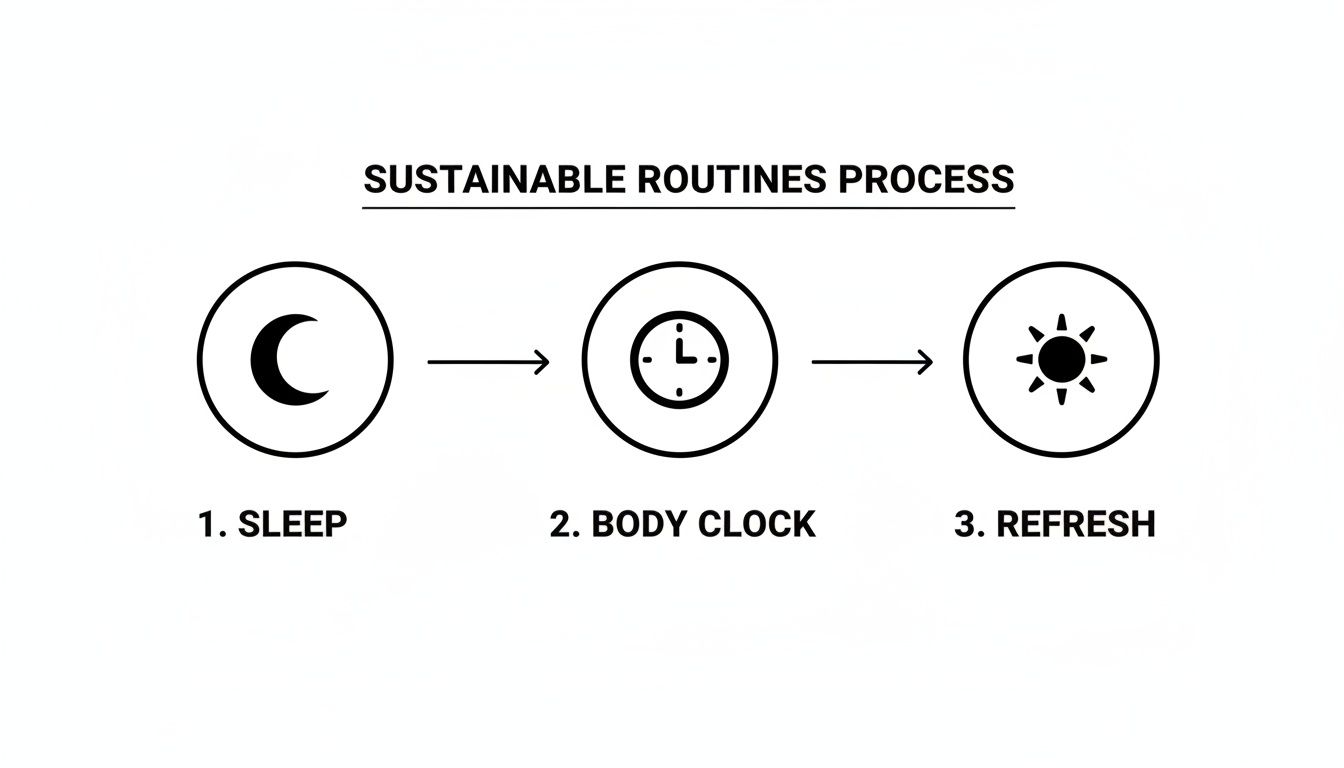
As you can see, it's a flow from rest to feeling refreshed. That's the foundation we're building on.
The Four Pillars of a Productive Morning
Instead of getting bogged down by a rigid checklist, think in terms of four essential pillars. You can pick and choose activities from each to create a flexible routine that you'll actually keep doing.
- Hydration: After 7-8 hours of sleep, your body is dehydrated. Drinking a glass of water first thing is one of the quickest ways to wake up your metabolism and shake off that morning grogginess.
- Movement: This doesn't have to be a punishing workout. We're talking about five or ten minutes of light activity. A few stretches or a quick walk around the block gets your blood flowing to your brain and gives you a natural energy boost.
- Mindset: How you start the day mentally sets the tone for everything that follows. Just a few minutes of meditation, journaling, or thinking about what you're grateful for can shift your entire perspective from reactive to proactive.
- Planning: Before the chaos of the day hits, take just five minutes to decide on your top one-to-three priorities. This simple act brings incredible clarity and stops you from getting sucked into low-impact busywork.
There's real data to back this up. Research from Indiana Wesleyan University found that people with consistent morning habits are much more likely to see themselves as successful. Why? Because routines are a direct antidote to low productivity. The average office worker, for instance, only gets about 2 hours and 53 minutes of real work done each day. You can explore the research on morning habits and productivity for a deeper look at how small changes can lead to huge gains.
To help you mix and match, here are a few ideas for each pillar, broken down by the time you have available.
Morning Routine Pillar Options
| Pillar | Low-Effort Option (5-10 mins) | Medium-Effort Option (15-20 mins) | High-Impact Option (30+ mins) |
|---|---|---|---|
| Hydration | Drink one full glass of water. | Drink lemon water while tidying the kitchen. | Hydrate while preparing a healthy breakfast. |
| Movement | Simple stretches by your bed. | A brisk walk around the block. | A full yoga session, run, or gym workout. |
| Mindset | Write down 3 things you're grateful for. | 10-minute guided meditation with an app. | Journaling, reading, or a creative hobby. |
| Planning | Identify your #1 priority for the day. | Review your calendar and top 3 priorities. | Plan your entire day in focused time blocks. |
This isn't about doing everything; it's about picking one thing from a couple of these pillars to get started. You can always add more later.
Real-World Examples to Inspire You
So, what does this look like in the real world? Remember, the routine should fit your life, not the other way around.
- The 30-Minute Power Start for Busy Parents: Wake up and immediately drink a glass of water while the kids' breakfast is in the microwave (Hydration). While they're eating, do 10 minutes of stretching in the living room (Movement). As you have your first sip of coffee, glance at your calendar and jot down your single most important task for the day (Planning).
- The 90-Minute Focus Block for Creatives: Start your day with a 20-minute yoga session or a walk outside to clear your head (Movement). Follow it up with a quiet 15-minute journaling session to get your ideas flowing (Mindset). Then, with a cup of tea, you dive into a 45-minute block of your most important creative work before you even think about checking email (Planning).
The best morning routine is not the one you read about; it's the one you consistently do. Permission to be imperfect and flexible is the key to long-term success.
These are just starting points. The goal is to design a blueprint that energizes you, not one that adds more stress to your plate. You can even use simple tech to help. For example, learning how to use AI tools can help you get a quick summary of your daily news or automatically organize your to-do list, freeing up precious mental energy first thing in the morning.
Using Movement to Prime Your Brain for Focus
Everyone knows exercise is good for you. That’s not news. But what most people miss is how just a few minutes of movement first thing in the morning can completely change your ability to focus for the rest of the day.
We're not talking about a punishing pre-dawn workout. Think of it more like flipping the "on" switch for your brain. The goal is simply to shake off that lingering sleepiness and get your mind ready for the day ahead.

Even five to ten minutes of light physical activity gets the blood pumping to your brain. That rush of oxygen and nutrients is what clears out mental fog, sharpens your attention, and releases a welcome dose of endorphins—those natural mood boosters that are fantastic for beating procrastination. The real secret here is consistency over intensity.
Low-Friction Ways to Add Movement
Making movement a staple of your morning shouldn’t feel like another chore on your to-do list. The trick is to make it so easy that you don't even have to think about it.
Here are a few dead-simple ideas you can try tomorrow:
- The Desk-Side Stretch: Before you even sit down, take five minutes for some basic stretches. Touch your toes, roll your neck, twist your torso. You can wake up your entire body without ever leaving your workspace.
- The Single-Song Dance Party: This sounds silly, but it works. While your coffee is brewing, put on one high-energy song and just move. It's an incredible mood and energy booster that takes all of three minutes.
- The Neighborhood Lap: A brisk ten-minute walk around the block does wonders. The combination of movement and a dose of natural light helps reset your internal clock, signaling to your brain that it’s time to be alert.
If you want a little more structure, YouTube is filled with guided stretching or quick workout videos. You can also check out some of the best Android apps for productivity, many of which have built-in timers or short fitness routines perfect for a packed schedule.
"A body in motion helps a mind find its focus. The goal of morning movement isn't to get fit; it's to get your brain ready to perform."
This small investment of time really does pay dividends all day. Studies have shown that when engaged business units boost their daily habits, they see 14% higher productivity. Yet, many of us feel like we're losing hours to distraction. A little morning movement helps flip that script.
At the end of the day, the best kind of morning movement is the one you’ll actually do. Play around with a few of these low-friction ideas until you land on something that feels energizing, not exhausting. This simple habit might just become the most powerful part of your entire routine.
Making Simple Tech Your Morning Ally
Let’s be honest: technology can be a real troublemaker in the morning. One minute you’re checking the weather, the next you’re lost in a sea of notifications, and your intended calm start is completely hijacked. But it doesn't have to be that way.
When you use it deliberately, technology can become your secret weapon for a smoother, more automated morning. The goal is to make tech serve you, not the other way around. Instead of letting your phone bombard you, you can set it up to build a peaceful, focused environment that protects your mental energy for the big stuff.
Gently Automate Your Wake-Up
One of the easiest wins for a better morning is simply removing friction. This is where a little automation goes a long way. Imagine saying a simple phrase like "Good morning" and having your smart speaker spring into action.
The lights slowly fade up like a natural sunrise, a chilled-out playlist begins to play, and you hear the coffee maker click on in the kitchen. This isn't just about saving a few minutes; it's about creating a consistent, gentle atmosphere that eases you into your day. No jarring alarms, no stumbling around in the dark. You’ve automated your environment to support your new habits. If this sounds appealing, learning how to set up a smart home is the perfect first step.
Getting started is surprisingly simple with tools you might already have:
- Amazon Alexa Routines: You can easily chain together actions—like getting a weather report, playing some music, and turning on smart lights—all triggered by one phrase like, "Alexa, start my day."
- Google Assistant Routines: Works just like Alexa's version, letting you bundle commands to control your devices and get a daily briefing with a single trigger.
- Apple HomeKit Scenes: For Apple users, you can create a "Morning" scene that adjusts your lights, opens smart blinds, and starts a podcast, all with a quick tap or a command to Siri.
Design Your Digital Sunrise
That first hour of your day is prime real estate for your brain. A "digital sunrise" is all about being the gatekeeper of what technology you let in, making sure it supports your goals before the chaos of the outside world crashes the party.
Think of it as putting your phone on a leash. Use its built-in focus or do-not-disturb modes to block every single notification except for, say, your meditation timer or your habit tracker. This simple trick creates a protective bubble around your morning, letting you move through your routine without getting sucked into an early-morning email fire drill.
Your phone should be the last thing you check, not the first. Use its powerful features to create a sanctuary of focus, not a gateway to chaos.
This isn't about ditching your phone entirely; it's about being in control. By managing the flow of information, you keep that proactive, clear-headed mindset you're working so hard to build. It's a small tweak that can completely change the trajectory of your day, turning your device from a potential saboteur into a powerful assistant.
How to Adapt Your Routine When Life Intervenes
A perfect morning routine is great on paper, but life rarely sticks to the script. A sick kid, an alarm that fails to go off, or an urgent early meeting can instantly derail your best-laid plans. I’ve learned the hard way that the secret to a lasting morning routine for productivity isn’t about being flawless; it’s about building a system that can bend without breaking.
It's so easy to fall into the "all-or-nothing" trap. One chaotic morning throws you off, and suddenly it feels easier to just abandon the whole thing for the rest of the week. The goal isn't perfection—it’s resilience. You want a routine that can take a hit and keep on going.

This is where having a solid backup plan comes in, for those days when life just happens.
Introducing the Minimum Viable Morning
Let’s call this your "Minimum Viable Morning," or MVM. Think of it as the emergency, bare-bones version of your ideal routine. It's a stripped-down, 5-to-10-minute sequence that includes only the absolute essentials. The point of the MVM isn't to have a wildly productive start; it's simply to maintain momentum.
When everything is going wrong, hitting this tiny goal prevents a "zero day." It keeps the habit chain from breaking and makes it infinitely easier to get back to your full routine the next day. A great MVM could be as simple as this:
- 1 Minute: Drink a glass of water first thing.
- 2 Minutes: Do a few quick stretches right by your bed.
- 2 Minutes: Glance at your calendar and identify your single most important task for the day.
That's it. In less time than it takes to check your email, you’ve hydrated, moved a little, and set a clear intention. This small victory gives you a psychological boost that will carry you through a chaotic day far better than skipping your routine altogether.
Your routine's success is measured by what you do on your worst days, not your best. The Minimum Viable Morning ensures you never have a day where you completely lose your footing.
Building Your Adaptation Plan
Most disruptions aren’t complete surprises; they tend to fall into predictable categories. Instead of letting them throw you for a loop every time, you can plan for them. Think about what usually torpedoes your mornings and create a simple "if-then" plan for each scenario.
Travel, for instance, is a classic routine-killer. The hotel gym is closed, you’re in a different time zone, and your usual setup is miles away. An MVM is perfect for this. But what if you also run into technical glitches like terrible Wi-Fi? It’s smart to have a few offline tasks handy, but if you really need to get online, you can learn how to troubleshoot internet connection problems yourself.
Here are a few common curveballs and how you might plan for them:
| Disruption Scenario | Your Adaptation Plan |
|---|---|
| You Oversleep | Forgive yourself. Immediately switch to your MVM—no excuses, no guilt. Just do the 5-minute version and get on with your day. |
| Kids Wake Up Early | See if they can join in (stretching together can be fun) or just execute your MVM while they’re eating breakfast. |
| Traveling | Pack a water bottle and use an app on your phone for a quick guided meditation or stretching session. Keep it simple. |
By planning for chaos ahead of time, you take the stress out of making decisions when you’re already frazzled. This proactive thinking is what turns a fragile habit into a sustainable, long-term practice.
Got Questions About Morning Routines? Let's Talk.
When you're trying to build a new morning routine, a few questions are bound to pop up. It's totally normal. Nailing down the answers to these common sticking points is often what makes the difference between a habit that fizzles out and one that actually sticks.
So, How Long Does This Actually Take?
You’ve probably heard the old "it takes 21 days to form a habit" myth. While that's a nice thought, the science paints a slightly different picture. Research shows it takes closer to 66 days, on average, for a new behavior to feel like second nature.
But don't get hung up on that number. The goal here isn't perfection; it's consistency. Miss a day? It happens. Just jump right back in the next morning without beating yourself up about it. If you focus on making the habit dead simple to start, you'll find it becomes automatic over a couple of months without you even realizing it.
What's the One Thing I Absolutely Must Do?
If you can only commit to one change, make it this: wake up at the same time every day. Yes, even on weekends. This is the bedrock of a great morning.
Why? Because it stabilizes your circadian rhythm—your body's internal clock. A steady rhythm means better sleep quality and more energy when you're awake. You'll start waking up feeling genuinely rested instead of automatically reaching for the snooze button. Every other part of your morning routine for productivity gets easier when it's built on this foundation.
"A 'morning routine' isn't about the time on the clock; it's about the intention you bring to the first hour of your day. Whether you wake at 6 a.m. or 9 a.m., the principles of a great start remain the same."
But What if I’m Just Not a Morning Person?
You can absolutely have a productive morning, even if you’re a night owl. This is probably the biggest myth out there, and it stops so many people from even trying.
A "morning routine" is just about what you do in the first 60 to 90 minutes after you open your eyes, no matter what time that is. The core ideas are the same for everyone:
- Hydrate your body.
- Get some movement in.
- Briefly plan your day.
- Avoid getting sucked into your phone right away.
The trick is to adapt these things to your own natural energy cycle (your chronotype), not force yourself into a 5 a.m. mold that's doomed to fail. Work with your body's clock, and you can build a routine that feels great and actually works for you.
At Simply Tech Today, we believe in making technology work for you, not the other way around. From smart home setups to the best productivity apps, we provide clear, practical advice to help you build a smarter, more intentional life. Explore more at https://www.simplytechtoday.com.
Member discussion