
Noise Cancelling Headphones Comparison Guide for 2024
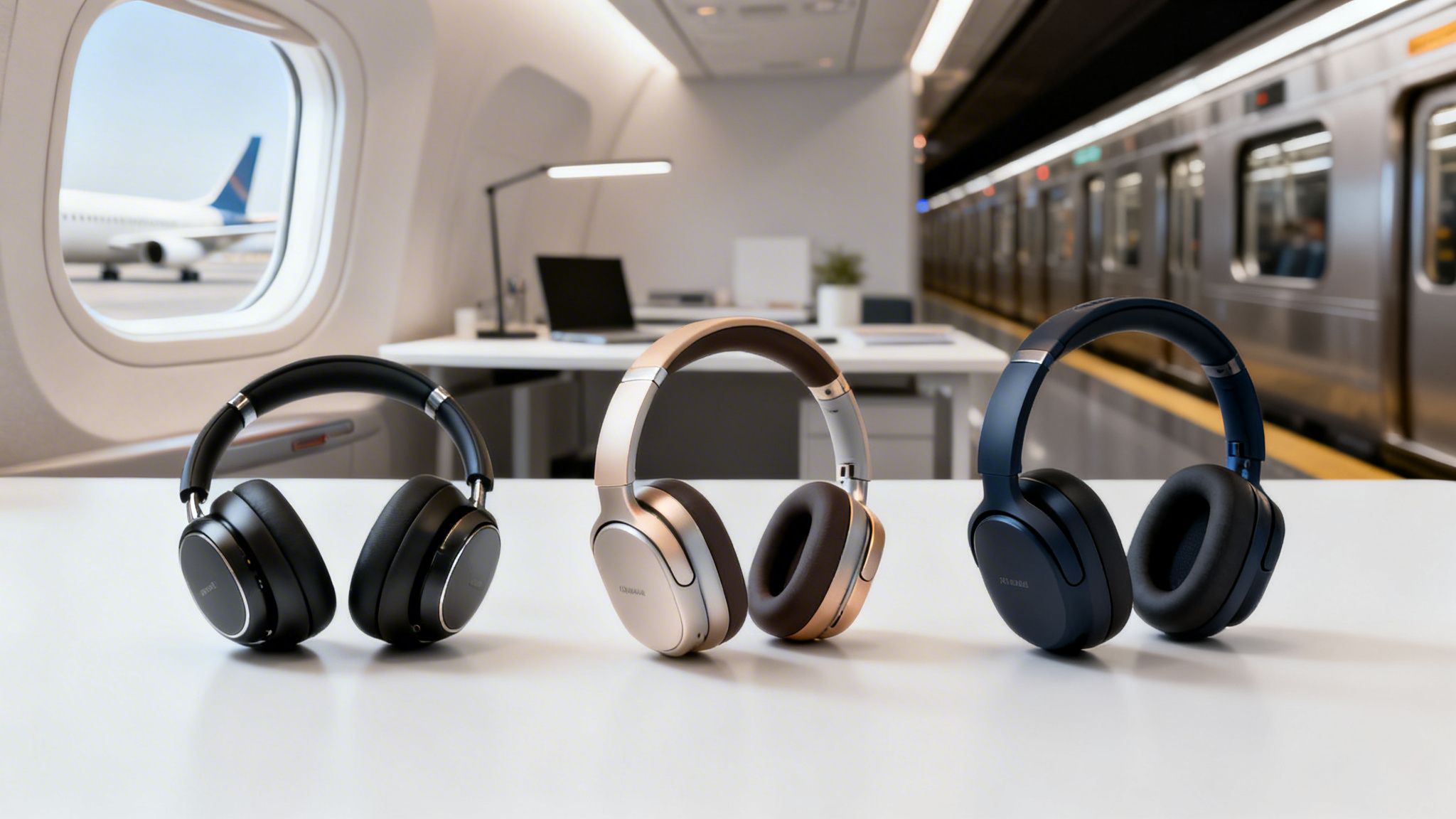
Picking the right noise-cancelling headphones comes down to a few key things: how well they block out the world (Active Noise Cancellation), how good your music sounds (audio fidelity), and whether you can wear them for hours without discomfort (long-wear comfort). The perfect pair for you really depends on your main goal—are you trying to silence a noisy commute, get lost in high-fidelity audio, or just find something light enough for all-day wear at the office?
How to Choose Your Ideal Noise-Cancelling Headphones
It can seem like there are a million options out there, but let's cut through the noise. At the core of it all is Active Noise Cancellation, or ANC. It’s a pretty clever bit of engineering. Tiny microphones on the outside of your headphones listen to the ambient sound around you, and the internal processor then creates an exact opposite sound wave—what’s known as "anti-phase." This inverted wave is played into your ears, effectively cancelling out the noise before you even hear it.
This tech isn't just a gimmick anymore; it's become a must-have for many of us. The market reflects that, too. Valued at roughly USD 12.0 billion in 2025, the global noise-cancelling headphone market is on track to hit USD 23.6 billion by 2035. A big part of that boom is the new normal of remote work, where the ability to create your own quiet space is priceless. You can dig into more of the market data over at Fact.MR.
Understanding the Different Types of ANC
You’ll see a few different terms thrown around, but not all noise cancellation is the same. Knowing the difference between the three main types will help you figure out what you actually need.
- Passive Noise Cancellation: This isn't really "tech" at all. It's just good design. The physical build of the headphones—think plush, dense earcups that create a good seal—physically blocks a certain amount of sound from reaching your ears.
- Active Noise Cancellation (ANC): This is the electronic magic I mentioned earlier. It’s best at tackling constant, low-frequency drones, like the rumble of an airplane engine, the hum of an AC unit, or the clatter of a train.
- Hybrid ANC: This is the top-tier stuff. Hybrid systems use microphones on both the outside and inside of the earcups. This dual approach lets them catch a much wider range of frequencies with pinpoint accuracy, giving you the most powerful and complete noise cancellation available.
Key Criteria for Our Comparison
To make this comparison genuinely useful, I’m focusing on the things that actually matter day-to-day. A great pair of headphones has to be more than just quiet; it’s about the entire experience. If you're looking for something more compact, we also have a comprehensive wireless earbuds comparison that dives deep into the in-ear models.
Here’s what we’re judging them on:
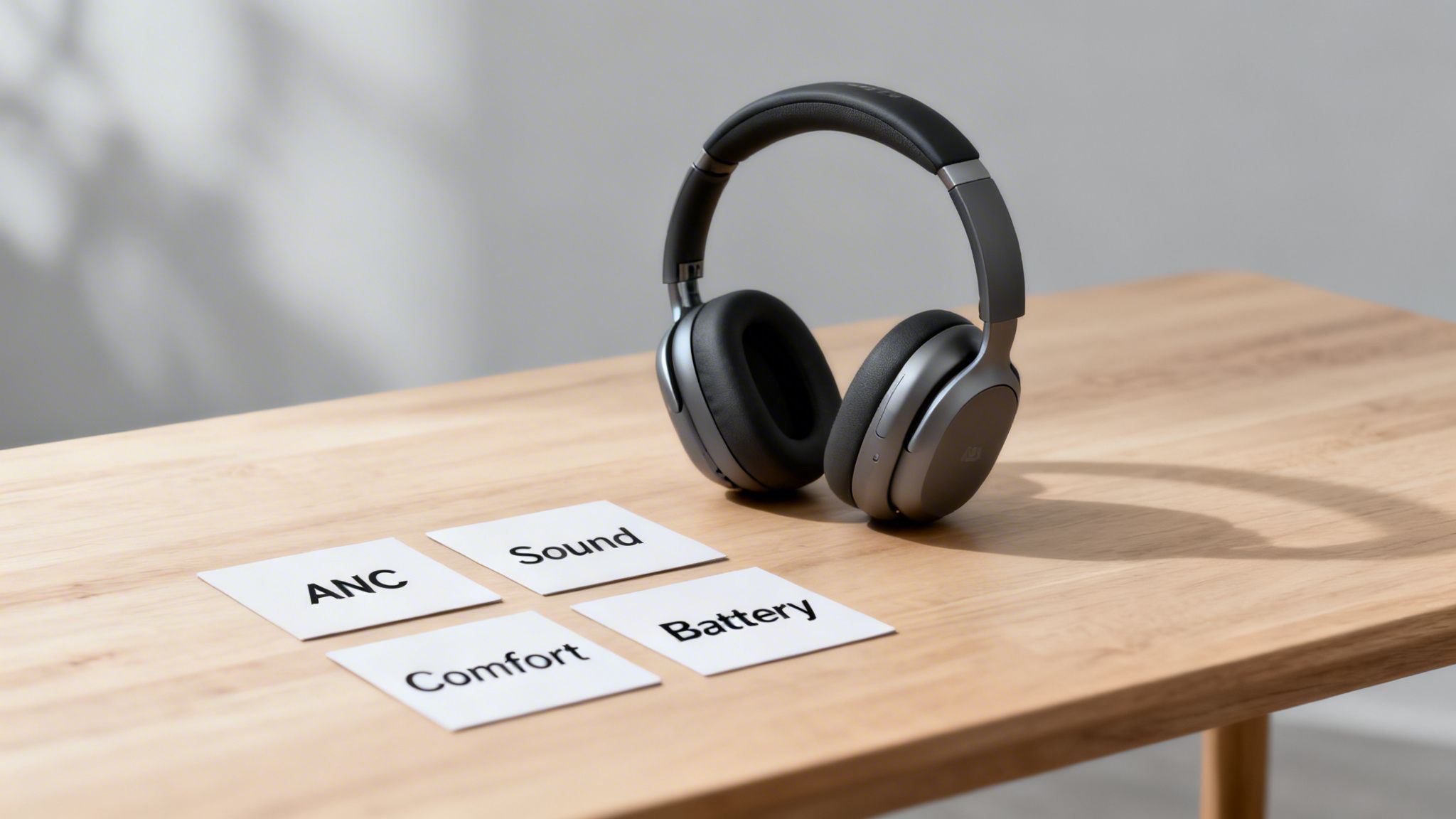
| Criteria | Why It Matters |
|---|---|
| ANC Effectiveness | How well does it silence everything from deep rumbles to high-pitched chatter? |
| Audio Fidelity | What’s the actual sound quality like? We're looking for clarity, balance, and richness. |
| Comfort & Design | Can you wear them for hours? We’ll look at weight, clamping force, and materials. |
| Battery & Connectivity | How long do they last on one charge, and is the Bluetooth connection rock-solid? |
| Microphone Clarity | How do you sound to others on a phone call, especially when you’re in a noisy place? |
Our Real-World Headphone Testing Methodology
To give you a genuinely useful comparison of noise-cancelling headphones, we have to go way beyond the marketing fluff and tech specs on the box. Our whole process is built around tough, real-world tests that copy the exact situations you'll find yourself in. We do this to make sure our recommendations are based on actual experience, not just numbers.
We firmly believe a great pair of headphones is more than just a list of features—it's an experience. That’s why every model goes through the same set of standardized, repeatable tests, letting us measure performance from every conceivable angle. This is how we can fairly compare different models and point out the small, but critical, differences that really matter.
Evaluating Noise Cancellation Effectiveness
Let's be honest, the main reason you're buying ANC headphones is to silence the world around you. So, we make testing this feature our top priority, throwing a variety of challenging environments at each pair. Our goal is to see how they handle different kinds of noise, not just one.
Our ANC testing starts with a mix of pre-recorded, standardized sounds played through a high-quality speaker system. This gives us a consistent, level playing field for every model we test.
- Low-Frequency Hum: We recreate the deep, steady rumble of a plane cabin or the drone of a train. This is a classic test for ANC and shows how well the tech can cancel out that persistent, low-end noise.
- Mid-Frequency Chatter: To simulate a loud café or a busy open office, we use recordings of conversations and background clatter. These kinds of sounds are notoriously tricky for most noise-cancelling headphones to block out.
- High-Frequency Sounds: We also check how well the physical design (passive isolation) and the active cancellation work together to cut down on sharper sounds, like someone typing nearby or distant sirens.
Assessing Audio and Microphone Quality
All the quiet in the world doesn't matter if your music sounds terrible. Our audio quality testing involves hours of listening across a huge range of musical genres, pushing the drivers to their limits to see what they're really made of.
We listen to everything from bass-heavy electronic tracks to complex classical pieces and dialogue-heavy podcasts. This helps us get a feel for the clarity, dynamic range, and the overall soundstage. We also test them right out of the box and then again with EQ adjustments to see how flexible the sound profile is.
A huge factor that often gets overlooked is microphone performance. We make test calls in two different settings: a quiet room and a noisy street. This tells us everything we need to know about vocal clarity, how well the mics filter out background noise, and whether you sound natural to the person on the other end.
Comfort and Usability Testing
Even the best-sounding headphones are useless if you can't stand to wear them. Our comfort test is simple but effective: we wear each pair for at least four hours straight.
During these long sessions, we're paying close attention to a few specific things:
- Clamping Force: Is the headband squeezing your head too tightly, or is the pressure just right for a secure fit?
- Weight Distribution: Do you start to feel a pressure point on the top of your head after an hour or two?
- Earcup Breathability: Do your ears get hot and sweaty, or do the materials breathe well enough for extended use?
Finally, every pair goes through our standardized battery drain test. We play audio at a consistent volume with ANC on until the battery completely dies. This gives us a true measure of endurance you can count on, not just the number printed on the box. This makes sure our final recommendations are as thorough and reliable as they can be.
The Ultimate Noise-Cancelling Headphones Comparison
Stepping into the world of high-end noise-cancelling headphones can feel like splitting hairs between amazing options. While most top-tier models get the job done, it's the subtle differences that really determine which pair is right for you. This comparison goes beyond the spec sheet to explore how these headphones actually perform in the real world, helping you find the perfect match for your life.
We're going to dive deep into scenario-based tests. From the constant drone of a 747 cabin to the chaotic chatter of a busy office, we'll break down which headphones truly create a sanctuary of silence and which ones just fall short.
ANC Effectiveness: A Head-to-Head Battle
Active Noise Cancellation (ANC) is usually the main reason people shell out the big bucks, but its performance really depends on your environment. For years, Sony's WH-1000XM series has been the gold standard for killing low-frequency noise. Think about that deep, gut-rumbling hum of a plane engine or the clatter of a train on the tracks—this is where Sony's tech creates a near-silent bubble, making them a traveler's best friend.
On the other hand, brands like Bose, with their iconic QuietComfort line, have a knack for tackling those tricky mid-range and unpredictable sounds. This makes them a fantastic choice for open-plan offices or coffee shops where sudden conversations and clattering dishes can shatter your focus. Apple’s AirPods Max also do a great job here, and their transparency mode is so good it almost feels like you’re not wearing headphones at all.
This chart gives you a visual idea of how a typical high-end model performs across our key testing categories.
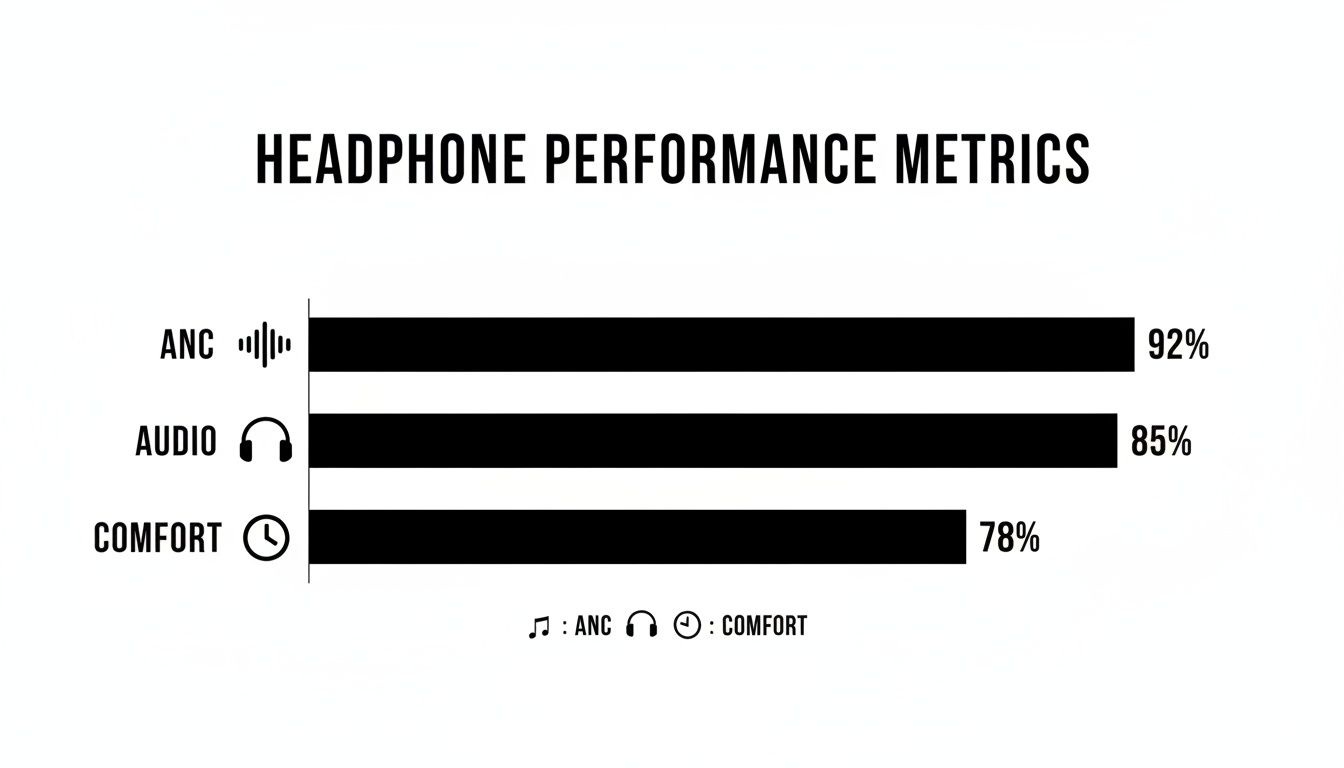
As you can see, while ANC is often the star of the show, you can't ignore audio fidelity and long-term comfort—they are just as crucial.
Sound Quality: The Audiophile's Dilemma
Once all that noise is gone, what's left is your music. This is where brand philosophies really start to show. Sennheiser, with headphones like the Momentum 4, tends to cater to the audiophile crowd, focusing on a balanced, detailed sound that stays true to the original recording. Their out-of-the-box tuning can be a bit bass-heavy for some, but a few quick tweaks in the app reveal a remarkably clear and immersive sound.
Sony, while fantastic, generally aims for a more consumer-friendly, bass-forward sound. It’s an energetic and exciting profile that makes modern pop, hip-hop, and electronic music really thump. Apple’s AirPods Max deliver a clean, crisp, and well-balanced sound that works beautifully within their ecosystem, especially with features like Spatial Audio that create an incredible movie-watching experience.
The bottom line is that the "best" sound is totally subjective. An audiophile might gravitate toward the nuanced detail of a Sennheiser, while someone just jamming to pop music on their commute will probably love the punchy, fun sound of a Sony.
It's no surprise this market is booming. Active noise-cancellation headphones are the fastest-growing segment in audio, with analysts projecting the market will jump from USD 20.38 billion in 2025 to USD 39.25 billion by 2030. In-ear true wireless stereo (TWS) models have become incredibly popular, snagging 46.20% of the market share in 2024. You can dig into the full research from Mordor Intelligence to see what's driving these trends.
Comfort and Design: Built for All-Day Wear
How long you can comfortably wear a pair of headphones comes down to three things: weight, clamping force, and materials. At 387.8 grams, the Apple AirPods Max are noticeably heavier than the competition, which is the price you pay for their premium aluminum and steel build. The mesh headband is brilliant at distributing that weight, but some people might still feel the heft after a few hours.
In contrast, Sony and Bose are masters of lightweight design, with most of their flagship models weighing well under 300 grams. The Sony WH-1000XM series, for example, uses a plush, soft-fit leather that seals out noise without squeezing your head. The Sennheiser Momentum 4 is also light at around 293 grams and feels great, though its headband can create a small pressure point over time compared to the wider, more forgiving designs from its rivals.
- Weight: Lighter is almost always better for all-day use. Sony and Bose are leaders here.
- Clamping Force: Bose finds that perfect sweet spot between a secure fit and gentle pressure. AirPods Max can feel a bit tighter.
- Materials: The premium feel of the AirPods Max is undeniable, but the synthetic leathers on Sony and Sennheiser models do an amazing job of passively blocking noise.
Battery and Connectivity: The Modern Essentials
In a world where we're constantly switching between devices, seamless connectivity is a must-have. Most premium headphones now feature a multipoint connection, letting you pair with your laptop and phone at the same time. This is a lifesaver—you can be watching a video on your computer and instantly take an incoming call on your phone without ever touching a setting.
When it comes to battery life, however, there's one clear winner. The Sennheiser Momentum 4 boasts a jaw-dropping 60-hour battery life with ANC turned on. That's more than double the industry standard of 20-30 hours you get from Sony, Bose, and Apple. It’s a game-changer for frequent travelers or anyone who just plain forgets to charge their gear. Of course, quick-charging is now standard, and most models will give you a few hours of juice from just a 10-minute charge. As you build out your home audio system, our smart speaker comparison might also give you some great ideas.
Microphone Performance: For the Remote Professional
A good microphone is no longer just a "nice-to-have." With so many of us working remotely, having clear voice pickup for calls and virtual meetings is non-negotiable. Headphone makers have poured a ton of R&D into beamforming microphones and AI algorithms that isolate your voice from the chaos around you.
In our testing, Sony and Apple consistently come out on top. Their advanced microphone arrays and processing are exceptionally good at cutting out wind noise and office chatter, making sure your voice is heard loud and clear. While other models are perfectly fine in a quiet room, they can start to struggle when things get loud, making them less reliable for that critical business call you have to take from a noisy cafe. For any professional, this distinction is absolutely vital.
Finding the Best Headphones for Your Lifestyle
After comparing dozens of noise-cancelling headphones, one thing becomes crystal clear: the "best" pair is the one that fits seamlessly into your life. A killer feature for one person might be totally useless to another. This is where we need to look past the spec sheets and start matching top-tier tech to how you'll actually use it.
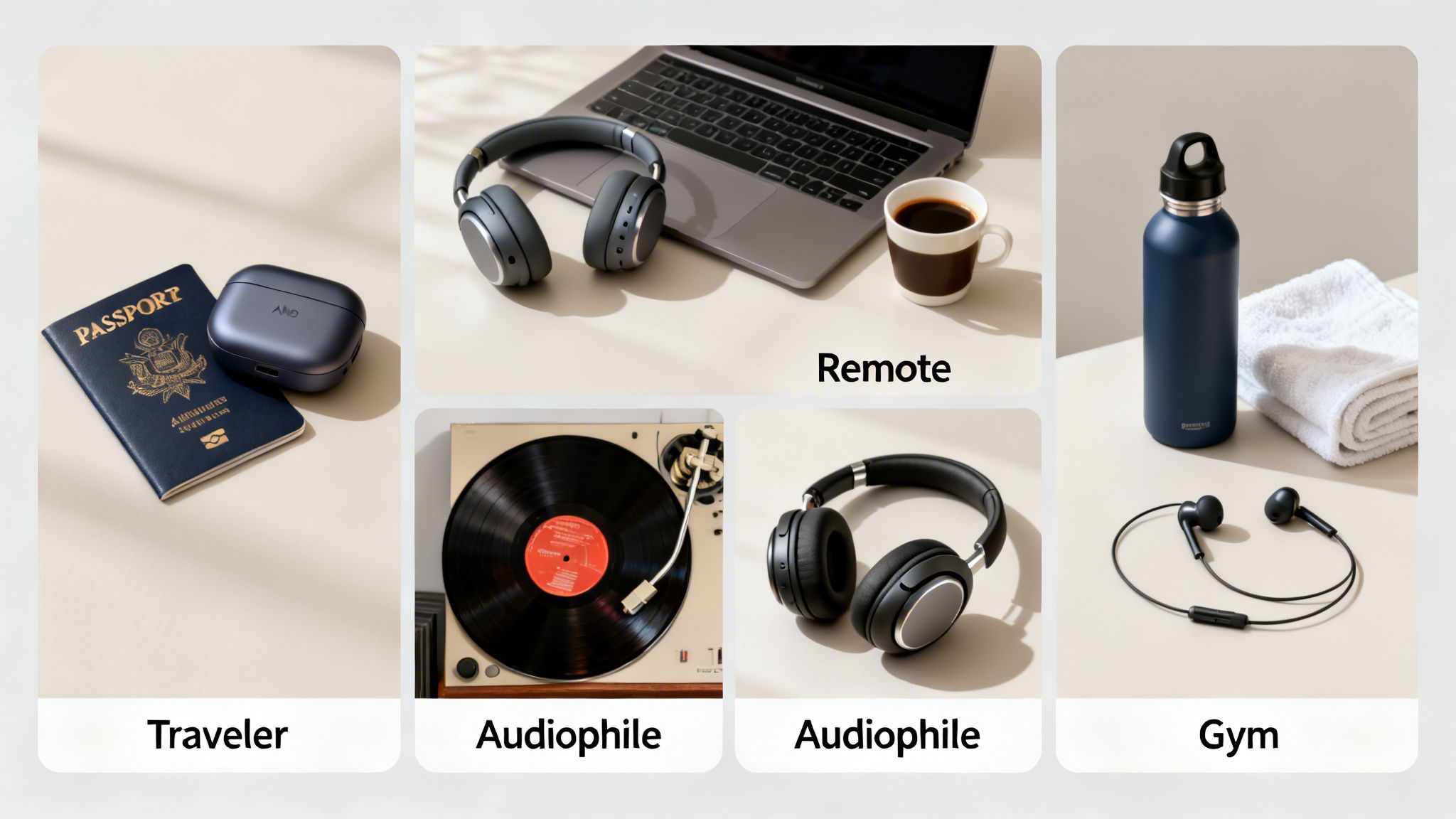
We’ve spent countless hours testing these headphones, and we've organized our recommendations based on real-world scenarios. Whether you're constantly on the move, working from home, or just chasing the perfect sound, the right headphones are out there.
The Frequent Traveler
If you practically live in airports and on planes, your needs are simple but demanding: elite noise cancellation and comfort that lasts for hours. You’re trying to create a pocket of peace 30,000 feet in the air, and that starts with headphones that can kill that relentless low-frequency drone.
- Top Priority: ANC that is surgical in its ability to eliminate engine hum and cabin chatter.
- Secondary Need: A lightweight design with soft, breathable earcups to avoid that dreaded head-clamp feeling on an 8+ hour flight.
In our experience, models like the Sony WH-1000XM series are the undisputed champions here. Their knack for turning the roar of a jet engine into a faint whisper is second to none. Plus, they weigh well under 300 grams, so you barely notice them. And of course, when you’re sprinting to catch a connecting flight, a long-lasting battery is a must. For those marathon travel days, you might also want to look into the best portable chargers for travel to keep everything juiced up.
The Remote Professional
Today's office could be your kitchen table one day and a noisy coffee shop the next. For remote workers, the game isn't just about listening—it's about being heard. Microphone quality is absolutely non-negotiable for sounding professional and clear on every video call.
A headphone's ability to isolate your voice from background chaos is a critical, often overlooked, feature. It's the difference between sounding professional and having to apologize for the barista grinding coffee beans behind you.
This is where headphones with advanced beamforming microphones and smart noise-reduction software really earn their keep. Models from Sony and Apple are often at the top of the pile, using multiple mics to zero in on your voice while actively filtering out the racket around you. Another essential is seamless multipoint connectivity, which lets you instantly switch from a Zoom call on your laptop to an incoming call on your phone without fumbling with settings.
The Dedicated Audiophile
If sound quality is your holy grail, you’re playing a different game entirely. You’re hunting for headphones that deliver a rich, detailed, and honest sound, getting you as close as possible to what the artist heard in the studio.
This means you need to obsess over details like:
- Driver Quality: Bigger, well-engineered drivers are often the key to producing a more dynamic and layered sound.
- Codec Support: Keep an eye out for high-resolution codecs like LDAC or aptX HD, which are crucial for getting the best possible quality over a wireless connection.
- Customizable EQ: A powerful companion app is a must, allowing you to fine-tune the sound to match your personal taste.
Brands like Sennheiser have built their entire reputation on satisfying this crowd. Their Momentum series, for instance, is famous for its wonderfully balanced and articulate sound profile. While the default tuning might lean a little heavy on the bass for some purists, a few quick adjustments in the app can dial in a truly incredible listening experience.
The Daily Commuter and Gym Goer
These two lifestyles share some common ground: you need gear that’s tough, stays put, and keeps you aware of your surroundings when needed. Daily commuters need headphones that can survive being stuffed in a bag day after day, and a good transparency mode is vital for hearing train announcements or traffic.
For the gym, the focus shifts slightly. A high IP rating for sweat and water resistance isn't a suggestion; it's a requirement to protect your gear. The fit also has to be rock-solid to keep them from flying off during a workout, which is why many athletes lean toward in-ear buds or on-ear headphones with a firm clamping force.
The boom in hybrid work, gaming, and a return to travel has only increased the demand for specialized hybrid active noise-cancelling headphones. It's clear that people want high-performance audio that is built for their specific, modern lives. You can explore more data about the consumer trends driving this market to get a better sense of where things are headed.
Making a Confident Purchase and Getting Started
After going through all the head-to-head comparisons, you've probably got your eye on a winner. But picking the right pair is only half the battle. What you do in the first ten minutes out of the box can make all the difference between a good and a great listening experience.
First things first: make sure you're buying from an authorized dealer. A quick check on the brand’s official website can save you from the nightmare of a counterfeit product or a voided warranty. It’s a simple step that guarantees you’re getting the real deal.
Once you’ve unboxed your new headphones, resist the urge to just pair them and hit play. The initial setup is your chance to really make them yours.
Personalizing Your Audio Experience
The very first thing you should do is download the companion app from the manufacturer. This little piece of software is the control panel for your new gear and the key to getting the best performance.
- Firmware Updates: Immediately check for firmware updates. This isn't just for bug fixes; manufacturers often push out significant improvements to noise cancellation algorithms and sound quality long after a product's release.
- EQ Customization: The factory sound setting is usually a safe, one-size-fits-all profile. Don't settle for it. Jump into the equalizer (EQ) and tweak the bass, mids, and treble until the audio sounds just right to your ears.
- Control Configuration: Most modern headphones let you customize the buttons or touch controls. Set them up to summon your favorite voice assistant, toggle noise-cancelling modes, or manage your music. This small change makes using them feel second nature.
Getting your new gear set up properly is just as important as picking the right model. Spending a few minutes in the app to update the firmware and dial in the EQ ensures you're hearing what the engineers intended and getting the performance you paid for.
The whole process is pretty simple, much like the quick personalization you'd do when unboxing a new smartphone. In fact, if you need a quick reminder, our guide on how to set up a new iPhone follows the same core idea of tailoring the device to you from the start.
Fine-Tuning for Peak Performance
Don't forget the physical fit. This is absolutely critical for both comfort and noise cancellation. Adjust the headband so the earcups create a complete, gentle seal around your ears without clamping down too hard. This seal provides passive noise isolation, which is the foundation that powerful Active Noise Cancellation builds on.
Finally, play around with the different ANC and transparency modes in the real world. The setting that works perfectly in a quiet coffee shop won't be the same one you need on a packed subway. By testing the modes in different places, you’ll quickly learn how to get the best out of your headphones no matter where you are.
Frequently Asked Questions About Noise Cancelling Headphones
Going through a detailed comparison of noise-cancelling headphones can stir up a lot of questions. Even after you've weighed all the pros and cons, you might still have a few things you're not sure about—the tech itself, how it works in the real world, and if you’re really making the right call. Let's clear up the most common questions we hear.
My goal here is to tackle those final uncertainties. We'll cover everything from the nuts and bolts of ANC to the practical side of using these headphones every day, so you can make your final choice with total confidence.
Is It Safe to Use Noise Cancelling Headphones Every Day?
Yes, for the most part, daily use is perfectly safe—as long as you’re sensible about it. The technology itself, which generates "anti-noise" to cancel out what's around you, doesn't pose any direct risk to your hearing. The real issue is situational awareness.
If you're walking near traffic or anywhere you need to be alert, it's a good idea to switch on transparency mode or just take them off. The other thing to watch is your volume. Just like with any headphones, cranking the music too loud is what causes long-term hearing damage, so keep it at a moderate level.
What Is the Difference Between ANC and Noise Isolation?
This one trips a lot of people up, but the difference is actually pretty straightforward.
Noise isolation is purely physical, sometimes called passive noise cancellation. It's all about the design and materials—think thick earcup padding and a tight seal that physically blocks sound waves from getting to your ears.
Active Noise Cancellation (ANC), on the other hand, is a tech-driven process. It uses tiny microphones to listen to outside noise and then creates an opposite sound wave to electronically cancel it out before you ever hear it. The best headphones use a mix of both for maximum effect.
A good way to picture it: noise isolation puts a pillow over the world's sounds, while great ANC hits the delete button. Isolation is better for sharp, high-pitched noises, but ANC is the undisputed champ at getting rid of constant, low-frequency drones like a plane engine.
Do Noise Cancelling Headphones Work Without Music?
They absolutely do. In fact, one of the best things about ANC is its ability to create a pocket of silence, even when you're not listening to anything. This is what makes them so valuable for focusing in a loud office, studying at a packed coffee shop, or just grabbing a quiet moment on a chaotic commute.
The noise-cancelling electronics work completely separately from the parts that produce music. Just power them on, flip the ANC switch, and you'll notice the world around you get significantly quieter. A lot of people buy them just for this feature alone.
Can Noise Cancellation Block All Sounds Completely?
No headphone technology can deliver pure, absolute silence. High-end ANC is incredibly impressive, but it’s a specialist. It's brilliant at erasing constant, low-frequency sounds—think the hum of an air conditioner, the rumble of a train, or the drone of an airplane cabin.
Where it struggles is with sudden, irregular, and high-pitched noises, like a nearby conversation, a dog barking, or a phone ringing. The best headphones will dial those sounds way down, but you'll probably still hear them faintly. Knowing this helps you set realistic expectations.
And once you've found the perfect quiet, you'll need the right soundtrack. If you're deciding on a music service, our guide on Pandora vs Spotify can help you pick the one that fits your listening style.
At Simply Tech Today, we focus on providing clear, practical advice to help you get the most out of your technology. Explore our site for more straightforward guides and reviews at https://www.simplytechtoday.com.
Member discussion