Smart Home Device Compatibility: A Simple Guide for 2026

You buy a smart bulb because the box says it works with voice assistants. You screw it in, open the app, and then hit the first annoying surprise. Your speaker can see the bulb, but your routines won't trigger. Or the bulb needs its own app, your smart plug needs another, and your camera insists on joining a third little island in your home.
That mess is common. Smart homes promise one tap, one voice command, one smooth system. What many people get is a pile of gadgets that are smart on their own but awkward together.
You're not overthinking it if you've paused before buying your next device. Smart home device compatibility is the difference between a home that feels helpful and one that feels like unpaid IT work.
Your Smart Home Dream vs The Incompatible Reality
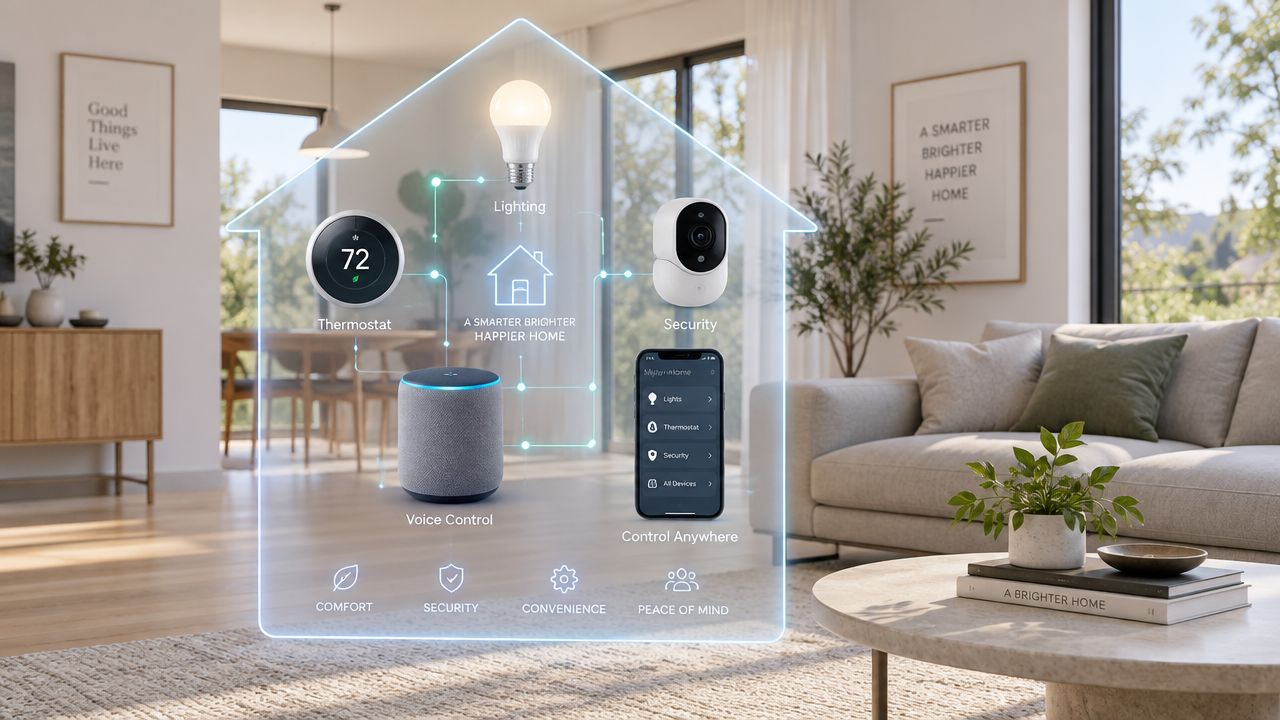
A familiar story goes like this. You start with a smart speaker. Then you add a light bulb, maybe a video doorbell, maybe a plug for a lamp. Each product works fine by itself. Then you try something simple, like “turn on the hallway lamp when I open the front door,” and suddenly the dream falls apart.
One device lives in Apple Home. Another only behaves in the brand's own app. A third says it “works with” your setup but only for basic on and off control. The result is a home that feels less like magic and more like juggling remotes.
That's happening inside a very large market. The global smart home market is projected to grow from $147.52 billion in 2025 to $848.47 billion by 2034, and active households using smart home technology are projected to reach 672.60 million by 2027, with household penetration projected to increase to 28.8% (market projections). You're not dealing with a niche hobby. You're dealing with a fast-growing category that still has some rough edges.
A lot of those rough edges start with the network underneath everything. If you want a plain-English primer on how the foundation affects your devices, this guide to commercial network setup is useful because many of the same ideas apply at home too.
Smart homes get confusing when buyers think “connects to Wi-Fi” automatically means “works well with everything else.”
If you're still setting up your first few devices, a beginner-friendly walkthrough on how to set up a smart home can help with the basics. But before you buy anything else, it helps to understand why these devices miss each other in the first place.
Why Your Smart Devices Dont Speak the Same Language
You bring home a new smart lock, pair your lights last week, and already have a voice assistant on the kitchen counter. Each product works fine on its own. Then you try to make them work together, and the whole setup starts feeling like a group chat where half the people are texting, two are emailing, and one only answers phone calls.
Smart home gear often behaves like people at an international meetup. One device speaks Wi-Fi. Another speaks Zigbee. Another speaks Z-Wave. A newer one speaks Thread. If they do not share a language, they need a translator such as a hub, bridge, or compatible ecosystem. Without one, they can sit inches apart and still fail to cooperate.
That is the core of smart home device compatibility. The central question is not only whether a device powers on or appears in an app. It is whether products can exchange the right kind of information, in the right format, at the right time.

Compatibility is not the same as teamwork
This is the part that trips up a lot of buyers.
Compatibility means devices can connect, pair, or show up in the same app. Interoperability means they can cooperate in useful ways, like triggers, automations, shared scenes, and local control. A device can be compatible enough to appear on your dashboard, yet still be a poor teammate.
That gap causes a lot of frustration. The gap between compatibility and true interoperability causes 40% of user frustration, because devices from different brands often fail to execute cross-brand automations reliably, and proprietary vendor protocols on Wi-Fi devices often block that teamwork (compatibility guide).
A plain example helps:
- Compatible but not interoperable: Your Wi-Fi bulb can be added to Alexa, and your Wi-Fi motion sensor can also be added to Alexa, but one or both still depend on the manufacturer's cloud, so the automation is delayed, unreliable, or missing key options.
- Interoperable: A motion sensor from one brand triggers a light from another brand inside the same ecosystem, consistently and without extra app gymnastics.
You can picture compatibility as getting two travelers into the same airport. Interoperability is getting them onto the same connecting flight, with the same schedule, and with their bags arriving too.
Why Wi-Fi alone doesn't solve it
Wi-Fi confuses people because it feels universal. Nearly every home has it, and many smart devices advertise it in big letters on the box. But Wi-Fi is only the road the message travels on. It does not guarantee that the devices agree on what the message means.
According to a breakdown of smart home system design, compatibility depends on three layers: the physical or radio layer, the network layer, and the application layer. If any one of those layers fails to match, devices from different manufacturers will not communicate properly (smart home system compatibility guide).
Here is a useful way to read that. The radio layer is how the message gets sent. The network layer is how it gets routed. The application layer is the actual vocabulary and rules. Two devices can share Wi-Fi at the radio level and still disagree at the application level, which is why "works on Wi-Fi" often turns out to mean "works best in its own app."
Practical rule: Do not ask only, “Does it use Wi-Fi?” Ask, “Will it join my ecosystem and take part in automations with my other devices?”
If you want a broader foundation before you compare hubs, ecosystems, and standards, this guide on what the Internet of Things means in plain English gives helpful background without drowning you in jargon.
The Key Players Ecosystems and Protocols
You buy a smart bulb, a lock, and a thermostat. Each one works in its own app. Then you try to build a bedtime routine, and the whole setup starts to feel less like one home and more like three small islands.
That is where ecosystems and protocols help make sense of the mess.
Ecosystems are the control layer you interact with. They are the apps, voice assistants, and dashboards where you add devices, organize rooms, and build routines. Protocols are the connection rules underneath. They decide how devices pass messages back and forth.
A useful way to picture it is this: the ecosystem is the place where the conversation happens, and the protocol is the language being spoken.

Ecosystems are where your smart home lives day to day
Amazon Alexa, Google Home, Apple Home, and Samsung SmartThings are the names buyers usually meet first. They handle voice control, routines, dashboards, notifications, and device setup.
Your ecosystem choice shapes daily life more than many people expect. It affects which voice assistant hears your commands, which app your family uses, and how easy it is to mix brands without extra work. If you are still choosing between platforms, this smart speaker comparison can help you compare the ecosystem side of the decision.
Wide device support helps, but it does not erase compatibility problems. A platform can support many products and still leave you dealing with different setup methods, limited automations, or features that only work in the manufacturer's app.
Protocols are the languages under the surface
This is the layer buyers often miss because it is printed in smaller text on the box.
| Protocol | How it behaves | Good fit | Common catch |
|---|---|---|---|
| Wi-Fi | Uses your home network directly | Cameras, speakers, plugs, TVs | Can rely heavily on cloud services and add load to your router |
| Bluetooth | Best for short-range, direct connections | Locks, sensors, phone-based setup | Limited range |
| Zigbee | Uses a low-power mesh, where devices can relay messages | Bulbs, sensors, switches | Usually needs a compatible hub |
| Z-Wave | Another low-power mesh built for home devices | Locks, sensors, thermostats | Usually needs a compatible hub |
| Thread | A newer mesh network designed for fast, low-power device communication | Matter devices, sensors, plugs | Needs the right border router setup |
If ecosystems are the control centers, protocols are the rules that let the devices understand one another. That is why two products can both say they work with the same voice assistant, yet still differ a lot in setup, speed, and automation options.
What the box tells you, and what it leaves out
The logo on the front usually tells you where a device can appear. The protocol in the specs tells you how it gets there.
For example, a bulb labeled “Works with Alexa” may join your Alexa app without much trouble. But if that same bulb uses Zigbee, you may still need an Echo model with a built-in Zigbee hub, or a separate hub that can translate for it. That is the part many shoppers only discover after opening the box.
This also matters if you are trying to keep older gear in service instead of replacing everything at once. A legacy Zigbee sensor or Z-Wave lock can often stay useful if you choose a hub or platform that still speaks its language. That gradual upgrade path matters for both budget and sanity, especially if you are also focused on optimizing home energy with IoT and want older thermostats, plugs, or sensors to keep contributing data.
A practical way to evaluate any device is:
- Ecosystem first: Where do you want to control it. Alexa, Google Home, Apple Home, or SmartThings.
- Protocol second: How does it connect. Wi-Fi, Zigbee, Z-Wave, Thread, or Bluetooth.
- Automation third: Will it participate in the routines you want to run.
The goal is not to buy the fanciest gadget in each category. The goal is to build a home where the devices can join the same conversation.
Matter The Universal Translator for Your Smart Home
You buy a new smart plug because the box says it works with your favorite app. Then your older sensors stay stuck in a different app, your speaker can see one device but not the other, and the “smart home” still feels like a group chat with half the people missing. That is the problem Matter is trying to fix.
Matter works like a shared language for smart home devices. If a bulb, lock, or sensor supports Matter, the goal is for it to join major ecosystems like Apple Home, Amazon Alexa, Google Home, and SmartThings with fewer brand-specific hoops. Instead of every company asking your devices to learn a different language, Matter gives them a common one.

Matter and Thread work together, but they are not the same thing
Many people get tripped up at this point.
Matter is the language. Thread is one of the ways that language travels around your home. A good mental model is this: Matter is the message, Thread is the road. Some Matter devices use Thread. Others use Wi-Fi. So when you see “Matter support,” do not assume every device uses the same path to connect.
That difference matters because performance depends on the path. A Matter device on Wi-Fi may work well without any Thread gear at all. A Matter device that uses Thread usually needs a Thread border router, such as certain smart speakers, hubs, or mesh Wi-Fi products, so it can reach the rest of your network.
The part many shoppers learn after they buy
Matter makes cross-brand setup easier, but it does not magically pull every old device into the new system. If you already own Zigbee or Z-Wave products, those devices usually still need their original hub or a platform that can keep translating for them. Matter helps new purchases speak a more common language. It does not erase the accents of your older gear.
That is why a gradual migration plan works better than a full rip-and-replace approach.
A practical path looks like this:
- Keep reliable legacy devices in place if they still do their job well, especially sensors, plugs, and locks.
- Use a compatible hub as a bridge so older Zigbee or Z-Wave devices can stay useful while newer Matter products join your main ecosystem.
- Buy new devices with Matter support first in categories you are likely to expand later, like plugs, bulbs, switches, and sensors.
- Check your hub and speaker models to see whether they also support Thread border router functions.
- Update software before troubleshooting because older firmware can block newer compatibility features. If you have not done that in a while, this guide on how to update firmware can help.
This approach is especially helpful if you care about efficiency as much as convenience. If you are also focused on optimizing home energy with IoT, keeping older but useful thermostats, plugs, and sensors in service can save money while you modernize the rest of the system.
Bottom line: Matter gives your smart home a better shared language, but you still need to check the transport layer, your hub, and your plan for older devices. The best results usually come from mixing Matter-ready products with a smart migration path for legacy gear.
Your Pre-Purchase Smart Home Compatibility Checklist
Buying smart home gear gets much easier when you stop shopping by category and start shopping by fit. Don't ask only, “Is this a good bulb?” Ask, “Will this bulb belong in my home without extra hassle?”
This checklist keeps you out of most compatibility traps.

Start with your home's main language
Before you compare products, decide what your primary control layer is.
- If you use iPhone, HomePod, and Apple TV often, Apple Home may be the cleanest fit.
- If your household already talks to Echo speakers, Alexa is the natural center.
- If you rely on Google Assistant and Nest devices, Google Home keeps things simpler.
Pick the place where you want routines, notifications, and voice control to live.
Use this six-point buying test
Identify your ecosystem
Know where you want the device to show up first. The wrong device in the wrong ecosystem usually means extra apps and weaker automations.Read the full technical specs
Don't stop at the product photos. Look for protocol details like Wi-Fi, Zigbee, Z-Wave, Thread, or Matter.Check the ecosystem badges
“Works with Alexa,” “Works with Google Home,” and “Works with Apple Home” each mean something slightly different. Look for the exact badge that matches your setup.Confirm whether a hub is required
Many returns often begin with this requirement. Some devices need a dedicated bridge, hub, or border router to behave properly.Prioritize Matter when it fits
Matter won't fix everything, but it improves your odds of building a flexible setup that's easier to grow.Verify app support on your phone
A device may support your ecosystem but still need the manufacturer's app for onboarding, firmware updates, or special settings.
A simple legacy device migration path
Smart home users often don't start from zero. They already own a random mix of devices from the last few years. Here's a practical way to migrate without replacing everything at once.
- Keep reliable legacy devices in place: If your older smart plug or bulb works well, don't rip it out just because it isn't Matter.
- Choose one main ecosystem now: Stop adding devices to multiple parallel systems unless you have a clear reason.
- Add new devices with Matter support first: That improves your future options without forcing an immediate overhaul.
- Use bridges or hubs where needed: For Zigbee or Z-Wave gear, a good hub can keep older hardware useful.
- Replace weakest links last: Swap the devices that cause the most app hopping, failed routines, or family confusion.
When you can't modernize everything, unify the control layer first. Then upgrade the devices that create the most daily friction.
Building a Connected Home Two Real World Examples
Theory helps. Seeing the trade-offs in real homes helps more.
The apartment renter starter kit
A renter usually wants simple setup, no wiring, and no landlord drama. So the best path is often a small ecosystem anchored by a smart speaker or display, plus a few plug-in or screw-in devices.
A solid starter setup might look like this:
- One smart speaker as the control center
- Matter-ready smart bulbs for the living room and bedroom
- Smart plugs for lamps or a coffee maker
- A door or motion sensor if the renter wants basic automations
This kind of setup keeps the install light and the commitment low. The renter avoids opening wall boxes, avoids dedicated electrical work, and keeps the whole system easy to pack up on moving day.
The key compatibility move here is consistency. Don't buy one bulb that lives in its own app, one plug that only supports another ecosystem, and one sensor that needs a separate hub unless you've chosen that on purpose.
The homeowner automation project
A homeowner often wants deeper automation. That usually means more permanent devices, more layers, and more attention to protocol choices.
A more advanced setup might include:
| Device type | Likely priority | Compatibility thought |
|---|---|---|
| Smart thermostat | Comfort and energy control | Check ecosystem support and whether professional install makes sense |
| Smart locks | Security and access | Confirm app, platform, and routine support |
| In-wall switches | Reliable lighting control | Verify protocol and hub requirements |
| Sensors | Automation triggers | Make sure they can trigger the devices you care about |
For thermostats, installation quality matters just as much as compatibility. If you're evaluating that part of a project, this overview of smart thermostat installation gives a useful look at the practical side.
Locks are another area where buyers often rush. Before you choose one, it helps to understand the hardware side as well as the app side. This guide to smart lock installation is a good companion to the compatibility questions.
The renter wins by keeping things simple. The homeowner wins by choosing a clear backbone and making every new device answer to it.
Frequently Asked Smart Home Compatibility Questions
What happens if my internet goes down
This is one of the most important questions, and many buyers don't ask it until too late. Around 60% of Wi-Fi-based smart devices become unresponsive during internet outages, while Z-Wave and Zigbee devices often keep local functionality through their hub. Matter is designed to improve local, offline control (smart home outage FAQ).
In plain language, cloud-heavy devices often fail harder when your connection drops. Locally controlled setups usually hold up better.
Do I need a hub if I use Matter devices
Sometimes yes. Matter reduces the need for brand-specific bridges, but it doesn't mean every home can skip central hardware. If your Matter devices rely on Thread for the best experience, you still need a compatible Thread border router.
The phrase “no hub required” on a box can be technically true and still leave out an important detail about performance.
Can I keep my older non-Matter devices
Usually yes. The smart move is to keep devices that still work well and stop expanding the chaos around them. Let your existing products stay where they are, choose one main ecosystem, and make new purchases more deliberate.
You don't need to rebuild the whole house in one weekend.
Why do two devices from the same network still fail to automate together
Because being on the same network isn't enough. They also need shared support at the control and application level. That's why two Wi-Fi devices can still behave like strangers.
What should I prioritize first
Pick your main ecosystem, check the protocol, and verify whether the device can join your actual routines. If a product can't support the automations you care about, it's not the right device for your home, even if reviews say it's excellent on its own.
Simply Tech Today breaks down confusing tech into practical advice you can use. If you want more clear guides on smart homes, device setup, apps, and everyday troubleshooting, visit Simply Tech Today and explore the latest explainers.


Member discussion