
Streaming Service Comparison Finding Your Perfect Match

Trying to pick the right streaming service feels a lot like standing in the cereal aisle—the options are endless, and they all seem good until you get them home. The trick is to figure out what you actually watch. Are you a binge-watcher who needs a deep library like Netflix? Or are you trying to keep the kids happy with Disney+'s family-friendly catalog? This guide will help you cut through the noise and find the right fit for your remote.
How to Choose the Right Streaming Service

The way we watch TV has completely changed. Nielsen recently confirmed that streaming now makes up 44.8% of all television viewing in the U.S., officially overtaking broadcast and cable combined. This isn't just a trend anymore; it's how most of us watch our favorite shows and movies. You can see the full breakdown in Nielsen's report.
With so many services competing for your subscription, the "best" one is entirely personal. It all comes down to what you value most. We're here to give you a clear framework for making that decision, going beyond just listing features to give you some real-world advice.
To find your perfect match, you’ll need to weigh a few key factors:
- Content Library: Are you looking for a massive, all-you-can-eat buffet of shows and movies, or a curated menu of exclusive originals?
- Pricing Tiers: How much are you really willing to spend to ditch ads, get 4K quality, or let everyone in the house stream at once?
- User Experience: Is the app easy to use on your TV, tablet, and phone? Making the right tech choice is just as important here as when you're selecting the best laptop.
Comparing Key Platform Differences
Before we get into the nitty-gritty, let's look at the big picture. Each major service is designed for a different kind of viewer, whether it's families, movie buffs, sports junkies, or someone who just wants to unwind with a good show. Knowing their core strengths is the first step to narrowing down your options.
The real winner in the streaming wars isn't one platform. It's the savvy viewer who builds a custom entertainment lineup that fits their life and their wallet.
| Feature | Netflix | Disney+ | Max (HBO) |
|---|---|---|---|
| Best For | Binge-watchers, diverse genres | Families, franchise fans (Marvel/Star Wars) | Prestige TV, Warner Bros. movie library |
| Unique Strength | Massive library of originals and licensed shows | Unmatched collection of iconic brands | Critically acclaimed HBO series and films |
| Price Point | Mid-to-High | Low-to-Mid | High |
Understanding the Modern Streaming Market
To pick the right streaming service, you have to get a feel for the battlefield. The old days, where just a couple of big names ran the show, are long gone. What we have now is a chaotic, competitive arena where giants are spending billions on content to win your eyeballs. This constant war for your subscription is what dictates everything from your monthly bill to which shows get the green light.
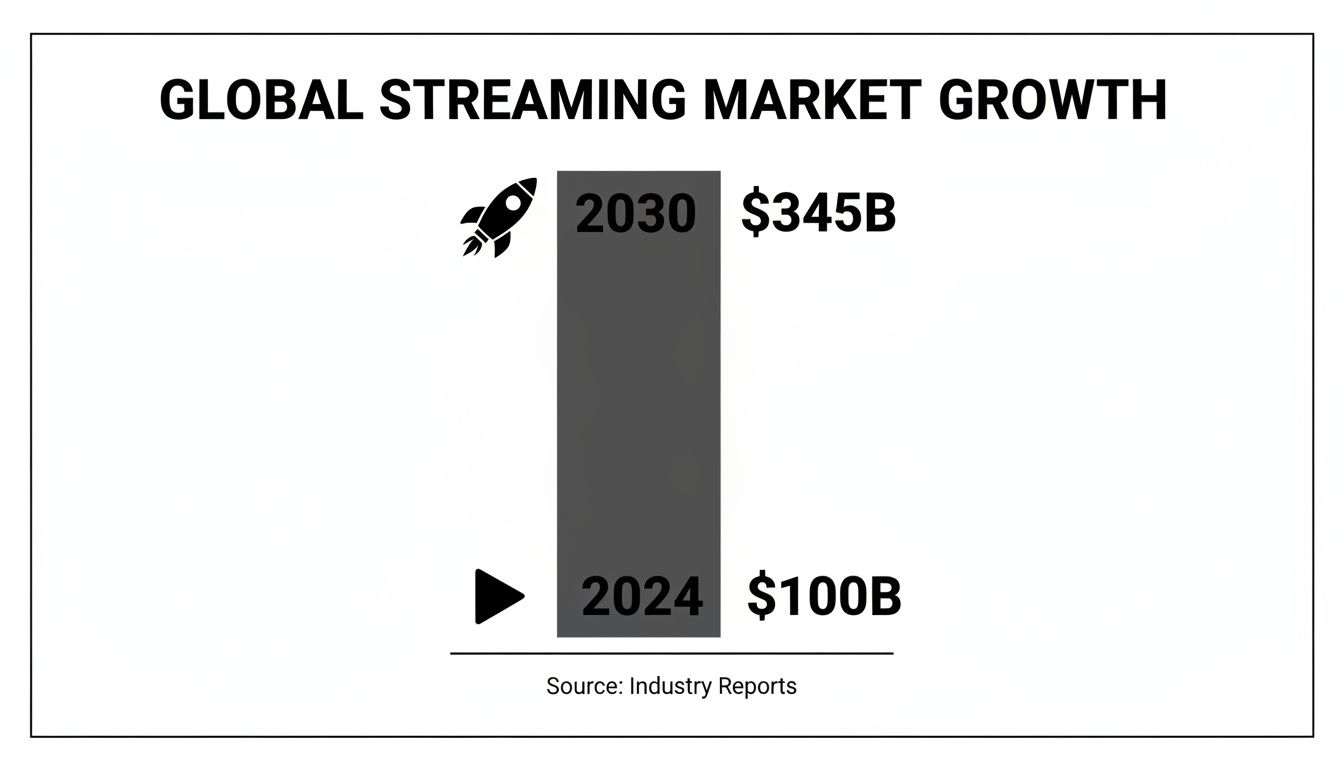
The scale of this industry is just massive. We're talking about a global market that's a multibillion-dollar machine. The live streaming corner of it alone is pegged at nearly $100 billion in 2024. Even more staggering, forecasters see that number ballooning to around $345 billion by 2030. That's not just growth; it's an explosion.
The Shift from Subscription-Only to Hybrid Tiers
When this all started, the model was simple: Subscription Video on Demand (SVOD). You paid a flat monthly fee for unlimited, ad-free viewing. Netflix practically wrote the book on this. But as the market got crowded, the cost of making must-see exclusive content went through the roof, and for many, that pure subscription model just wasn't cutting it anymore.
That financial squeeze opened the door for a couple of other approaches to gain ground:
- AVOD (Advertising-Based Video on Demand): Think of services like Tubi or Freevee. They give you a library of content for free, and you pay with your time by watching ads.
- FAST (Free Ad-Supported Streaming TV): This is what you get with The Roku Channel or Pluto TV. They're set up like old-school broadcast TV, with scheduled channels and commercial breaks, all for free.
The real game-changer wasn't just more services popping up—it was how they all started blending their business models. The line between what's "premium" and what's "free" got fuzzy, fast. Suddenly, every single platform had to prove its worth.
The upshot is that nearly every major service now plays both sides. You can still get that premium, ad-free experience, but there's almost always a cheaper, ad-supported plan right alongside it. This lets them hook budget-conscious viewers while still pulling in ad dollars. It's a smart, flexible business model, and knowing how it works is key to understanding the real value you're getting.
This battle for your wallet has only intensified as our homes have filled with more connected devices, a core idea behind the Internet of Things. With services now able to reach you on any screen, from your phone to your smart fridge, the fight for your subscription has never been fiercer.
A Detailed Streaming Platform Comparison
Choosing a streaming service is more than just finding a couple of good shows to watch. You're really picking an entire entertainment ecosystem that needs to mesh with your lifestyle, your family's habits, and even your tech setup. To do a proper streaming service comparison, we have to look past the flashy ads and get into the nitty-gritty details that actually shape your day-to-day viewing.
The money involved is staggering. The global streaming market is on track to explode from $100 billion in 2024 to a projected $345 billion by 2030. This isn't just a fun fact; it's the engine driving the fierce competition we see today.
This incredible growth forces every service to find its own niche, whether it's through original content, technical prowess, or sheer library size. Let's break down how the major players really stack up.
Content Philosophy: Originals Vs. Licensed Catalogs
At the heart of any service is its library, and each has a distinct philosophy. Netflix pretty much invented the "all-you-can-stream" buffet, flooding its platform with a mix of licensed movies and an endless assembly line of its own original shows. The goal here is volume—they want to make sure there's always something new, even if the quality can be a bit hit-or-miss.
Max (what we used to call HBO Max) takes a more curated, quality-over-quantity approach. It's built on the rock-solid foundation of HBO's legendary prestige TV and is beefed up with the massive Warner Bros. film vault. The catalog is smaller than Netflix's, but you could argue the average show is a lot stronger.
Then you have Disney+, which is all about leveraging its powerhouse brands. It is the one-stop shop for everything Marvel, Star Wars, Pixar, and Disney. For franchise fans and families, it's pretty much unbeatable.
Technical Features: 4K Streaming And Offline Viewing
The actual viewing experience comes down to the tech, and this is where those pricing tiers really start to matter. Most of the big names offer 4K HDR and Dolby Atmos, but you'll often have to shell out for their priciest plans to get it.
- Netflix: Keeps its best audio and video quality locked away in its Premium tier, which also bumps up your simultaneous stream count.
- Prime Video: Gives you 4K content as part of the standard Prime membership, which is a fantastic value if you're already in the Amazon ecosystem.
- Disney+: Bundles 4K HDR and Dolby Atmos into its premium ad-free plan, making it a great pick for cinephiles who want top-tier quality.
Offline downloads are a lifesaver for anyone who commutes or travels. The tech behind this is pretty slick, relying on data management principles similar to how cloud storage works to get content onto your device. Just about every service offers downloads, but pay close attention to the fine print—the number of titles you can save and on how many devices often depends on your subscription level.
The most overlooked factor in a streaming service comparison is whether a platform’s tech matches your hardware. Paying extra for a 4K plan is a waste of money if you don't have a 4K TV and a fast, reliable internet connection to back it up.
User Experience And Simultaneous Streams
How you actually find and watch content matters. A clean, intuitive interface with smart recommendations can make all the difference. Netflix is still the king here with its polished algorithm, while platforms like Peacock and Prime Video have often been dinged for having clunky or confusing menus.
For families and anyone with roommates, the limit on simultaneous streams is a huge deal.
- Basic Tiers: Usually cap you at 1 or 2 streams at a time.
- Premium Tiers: Can go up to 4 simultaneous streams.
This is a critical detail. If you've got multiple people in your house who want to watch different things at the same time, upgrading to a higher-tier plan becomes a necessity, not a luxury.
Finding the Best Service for Your Viewing Style
Let's be honest, there's no single "best" streaming service for everyone. The right choice is completely personal. What’s a perfect match for a serious movie buff could be a total bust for a family with young kids. This is why we need to look at this through the lens of who's actually watching.
Instead of getting bogged down in an endless list of features, think about your viewing habits first. Once you know what you’re looking for, you can find a service (or a couple of them) that actually fits how you and your family watch TV.
For The Family Household
When you have viewers of all ages under one roof, your checklist looks a lot different. You're hunting for a deep library of kid-friendly content, easy-to-use parental controls, and enough simultaneous streams to keep the peace.
- Top Pick - Disney+: This is the heavyweight champion for families, and it's not even close. With the entire Disney, Pixar, Marvel, and Star Wars catalogs at your fingertips, it’s a bottomless well of safe and engaging shows for kids and teens. The interface is clean, and the parental controls are simple to set up and manage.
- Strong Contender - Netflix: While its reputation is built on prestige adult dramas, Netflix has poured a ton of resources into its kids and family originals. You'll find a massive variety of animated shows and movies, and the dedicated kids' profiles do a great job of locking younger viewers into age-appropriate content.
Of course, a common challenge for parents is just managing screen time in general. After you've picked your service, it’s worth looking into practical ways to reduce screen time to help build a healthier media diet for everyone.
For The Avid Cinephile
If movies are your passion, a standard, run-of-the-mill library just won't do. You need curated collections, timeless classics, international cinema, and the best possible video and audio quality to appreciate the art form.
The cinephile's choice isn't about having the most content; it's about having the right content. Look for services that respect film history and offer a viewing experience that honors the director's vision.
- Top Pick - Max: This is a powerhouse. Max brings together HBO's incredible television legacy with the gigantic Warner Bros. film library. It consistently offers curated collections based on directors or genres and includes the Turner Classic Movies hub, making it an absolute must-have for any serious film lover.
- Niche Choice - The Criterion Channel: Think of this as a film school in an app. It's a meticulously curated streaming service dedicated to classic, international, and art-house cinema, often bundled with the commentaries and special features you’d find on a physical release.
For The Sports Fanatic
This is where things get tricky. The world of live sports streaming is notoriously fragmented. Broadcast rights are sliced and diced across a dozen different platforms, so finding a single service that has everything is next to impossible.
- Live TV Services - YouTube TV & Hulu + Live TV: For the most comprehensive coverage, these are your best bets. They act as cable replacements, giving you local channels, major players like ESPN and FS1, and often the regional sports networks you need for your home teams.
- Specialty Services - ESPN+ & Peacock: Many leagues and events are now exclusive to specific apps. If you’re a dedicated fan of UFC, Premier League soccer, or other specific sports, you'll likely need to add services like these to your lineup.
For The Budget-Conscious Viewer
Want to stay entertained without your wallet taking a hit? Your strategy is all about finding maximum value.
This means being smart about your choices. Look for the more affordable ad-supported plans from services like Peacock and Paramount+, which offer great content for a low price. Don't forget to explore the world of free, ad-supported streaming television (FAST) services. Platforms like Tubi and Pluto TV have thousands of movies and shows available for free—they make for excellent supplements to one or two paid subscriptions.
Managing Your Subscriptions in a Crowded Market
Let's be honest: juggling a half-dozen streaming services is the new reality. But with it comes the inevitable headache of rising costs and what many are calling subscription fatigue. As we all stack services to get access to different shows and movies, the monthly entertainment bill can easily get out of hand. This has made us all a lot smarter about where our money goes.
The streaming giants have noticed. We're now seeing two distinct trends: prices for the premium, ad-free plans keep creeping up, while nearly every major service has rolled out cheaper, ad-supported tiers. They’re trying to keep budget-conscious viewers in the fold while maximizing revenue from those willing to pay more.
In this environment, you have to be strategic. The days of "set it and forget it" are over if you want to keep your entertainment budget in check.
Building a Cost-Effective Streaming Strategy
Getting proactive about managing your subscriptions can save you a surprising amount of money over a year. The trick is to shift your mindset and start actively questioning the value you get from each service every month. It’s easier than it sounds.
Here are a few practical ways to take control:
- Rotate Your Services: Don't pay for a service you aren't using. Seriously. Sign up for one month to binge that new season of your favorite show, then cancel it and hop over to another platform for something else.
- Embrace Ad-Supported Tiers: If you can live with a few commercial breaks, these plans are a game-changer. The savings are significant, and for many, it's a small price to pay for a much lower monthly bill.
- Use Free Trials Strategically: Time your free trials to coincide with a big movie premiere or a new season launch. This lets you see what a service has to offer—and watch the content you really care about—without spending a dime.
The most powerful tool you have for managing your streaming budget is the "cancel subscription" button. Don't be afraid to use it. You can always sign back up in a few clicks when that must-see show comes back.
This kind of flexibility is essential today. Viewing habits are changing fast. Globally, 76% of people now stream content every single day, and it's common for households to have several subscriptions running at once. At the same time, the rise of free, ad-supported services has prompted a growing number of viewers to downgrade or cancel their paid plans entirely.
Protecting Your Data Across Platforms
As you sign up, cancel, and switch between services, you're spreading your personal information across a lot of different companies. Each one has its own privacy policy and security setup, and it's smart to be mindful of your digital footprint.
To stay on top of it, check out our guide on how to protect your privacy online for some straightforward tips. A little awareness goes a long way in letting you enjoy your favorite shows with more peace of mind.
Your Final Decision Checklist
Okay, you've seen the side-by-side breakdowns and weighed the options. Now it's time to make the final call. This isn't about just picking one service; it's about building an entertainment stack that actually works for your life and your wallet.
Before you pull out your credit card, take a minute to run through these questions. A little self-reflection here will save you a lot of buyer's remorse and subscription headaches down the road.
The Self-Assessment Questionnaire
- Who's watching? Is this just for you? Or are you sharing with a partner, kids, or roommates? This will tell you if you need to prioritize multiple simultaneous streams and solid parental controls.
- What do you really want to watch? Be honest. Are you after the latest buzzworthy original series, a huge backlog of classic films, live sports, or a kid-safe zone filled with animation? Figure out your top priority, and you'll find the library that matches.
- What's your actual budget? Pick a number you're comfortable spending on entertainment each month and stick to it. This is the fastest way to decide whether that premium ad-free plan is a must-have or if an ad-supported tier is the smarter move.
- What gear are you working with? Got a high-end 4K HDR TV and a killer Dolby Atmos sound system? Great, then premium tiers might be worth it. If not, you’re just throwing money away paying for quality you can't even see or hear.
- How do you manage subscriptions? Are you a "set it and forget it" type, or are you willing to jump between services to catch new releases? If you're the latter, stick with monthly plans. If you're loyal to one, an annual plan could save you some cash.
The secret to mastering the streaming game isn't finding one perfect service. It's about anchoring your setup with one or two core subscriptions and then rotating others in and out as their big shows premiere.
To wrap things up, I've put together a final scorecard. It boils down all the details into a simple rating system for each major platform, showing you at a glance where they excel and where they lag behind. Think of this as your last gut check before you commit.
Final Verdict Scoring Summary
Here's how the major players stack up based on our analysis, rated on a scale of 1 to 5.
| Service | Original Content | Library Depth | Value For Money | User Interface | Overall Score |
|---|---|---|---|---|---|
| Netflix | 5/5 | 5/5 | 3/5 | 5/5 | 4.5/5 |
| Disney+ | 4/5 | 4/5 | 5/5 | 4/5 | 4.3/5 |
| Max | 5/5 | 4/5 | 4/5 | 3/5 | 4.0/5 |
| Prime Video | 3/5 | 5/5 | 5/5 | 2/5 | 3.8/5 |
| Hulu | 4/5 | 3/5 | 4/5 | 4/5 | 3.8/5 |
| Peacock | 3/5 | 3/5 | 5/5 | 3/5 | 3.5/5 |
This table should give you a clear, final reference point. Match these scores against your own priorities from the questionnaire, and you'll have a confident answer.
Member discussion